

Bandage: Holds a Dressing On and Keeps Dirt Out of a Wound
A bandage holds a dressing firmly over a wound so it stays put, stops dirt and knocks reaching the cut underneath, and takes up the fluid that seeps out while it heals. That is the job it does in a house, in a car and in a workplace first aid box, and it is why it is the one thing people reach for before they know how bad an injury is.
This is the general-purpose roll for everyday cuts, grazes and scrapes. Our pharmacist will tell you which bandage your particular injury calls for, because a sprained ankle, a bleeding hand and a weeping burn each want a different one, and buying the wrong one is how people end up with a dressing that has slid down the shin by lunchtime. Tell us what happened and we will send the bandage with a dressing to go under it, which is the part that gets left out.
The Four Kinds, and Which One You Need
People say bandage and mean four different things. Getting this right is most of first aid.
An adhesive plaster is a small dressing with its own sticky edges, for a cut you can cover with a stamp. Nothing else needed.
A gauze or conforming bandage wraps around a limb to hold a dressing on. This is the everyday roll, for a cut that needs a pad over it and something to keep the pad there.
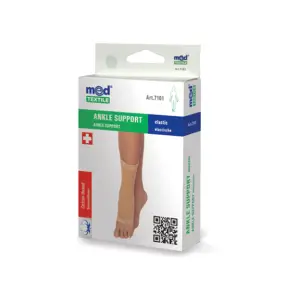
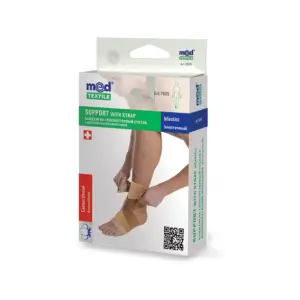
An elastic or crepe bandage stretches, so it gives even pressure for a sprain or a strain. Our crepe bandage, 15 cm by 4.5 m, is the one for a turned ankle, and it is washable and reusable.
A compression bandage gives sustained graduated pressure for leg ulcers and swelling, and it is applied by a clinician rather than bought off a shelf. Ask our doctor rather than wrapping a leg tightly yourself.
Putting a Bandage On
Clean hands first, and clean the wound. Rinse with clean running water or saline, pat the skin round it dry, and put a sterile dressing over the wound itself before any bandage goes near it. The bandage holds the dressing in place; the dressing is the part that touches the wound.
Start below the injury and wrap upwards, towards the heart. Overlap each turn by about half the width of the bandage, keep the tension the same all the way up, smooth out wrinkles as you go, and finish above the injury rather than on it.
Then check the fingers or the toes. Ten minutes later, and again at bedtime. Press a nail and watch the colour come back. Pins and needles, numbness, a bluish or very pale colour, coldness, or pain that is getting worse all mean it is too tight, so take it off and start again more loosely. A bandage that is too tight does more harm than no bandage at all.
Changing It and Watching the Wound
Change the dressing daily on an ordinary wound, and sooner if it is wet through, dirty or slipping. Wash your hands before and after, and lift the dressing off slowly; if it has stuck, soak it with saline or clean water rather than pulling it away and reopening the wound.
Look at the wound each time you change it. Spreading redness round the edges, swelling, heat, increasing pain after the first day or two, pus, a bad smell, red streaks running up the limb, or a fever all mean infection. Come to our doctor the same day for any of those.
Keep clean sterile gauze swabs and a bottle of povidone iodine antiseptic alongside the bandages, because a bandage without a dressing and something to clean with is half a first aid box.
When a Wound Needs More Than a Bandage
Bleeding that continues after ten minutes of firm, continuous pressure needs to be seen today. Keep pressing and raise the limb on the way.
A deep cut, a wound with anything in it, a cut over a joint, or a wound that gapes open may need closing, and the window for that is hours rather than days.
A dirty wound, an animal or human bite, or a puncture from something rusty raises the tetanus question. Our doctor will check whether a tetanus top-up is due, and bites usually need antibiotics as well.
And a wound on somebody with diabetes or poor circulation is a different situation from the same wound on anybody else. Please bring it to our doctor early rather than managing it at home for a fortnight first.
Is a Bandage Right for You?
A bandage suits most everyday cuts, grazes and dressings. Please speak to our pharmacist or our doctor before relying on one if any of these apply:
- The wound is deep, gaping, bleeding heavily, or has something in it. Please come in or go to a hospital today rather than bandaging it and waiting.
- You have diabetes, poor circulation, or any numbness in the limb. Wounds behave differently and tight bandaging is riskier, so let our doctor see it and let us advise on the bandage.
- You are bandaging a leg for swelling or an ulcer. That is compression, which is set and applied by a clinician. Ask our doctor rather than wrapping it tightly yourself.
- The skin round the area is already broken, rashy or fragile, as it often is in the elderly. Tell our pharmacist and we will suggest a gentler dressing and fixing.
- It is for a child, or the wound is on the face. Ring us. Both need a different choice from the roll you would use on an adult shin.
Our pharmacists will match the bandage to the injury and put a small kit together for you, and our doctor is here the moment a wound stops looking straightforward.
Where to Buy a Bandage in Kenya
Order online and we deliver countrywide, or collect from our pharmacy at Kahawa Sukari Shopping Center, Nairobi. We send orders to Nairobi and every neighbourhood around it — the CBD, Westlands, Parklands, Gigiri, Muthaiga, Runda, Rosslyn, Kitisuru, Lower Kabete, Lavington, Kileleshwa, Kilimani, Karen, Langata, South B, South C, Eastleigh, Buruburu, Donholm, Embakasi, Ngong Road, Kasarani, Roysambu, Zimmerman, Githurai, Ruaka, Banana Hill, Two Rivers, Village Market and Pride Lands — and across Kiambu, Thika, Juja, Ruiru, Kikuyu, Limuru and Ngong.
Beyond the capital we deliver to Mombasa, Kisumu, Nakuru, Eldoret, Nyeri, Machakos, Athi River, Kitengela, Kajiado, Naivasha, Narok, Kericho, Bomet, Kisii, Migori, Homa Bay, Siaya, Bungoma, Busia, Kakamega, Vihiga, Webuye, Kitale, Nandi Hills, Iten, Kapenguria, Embu, Meru, Chuka, Kerugoya, Murang’a, Othaya, Nyahururu, Nanyuki, Maralal, Isiolo, Marsabit, Moyale, Wajir, Mandera, Garissa, Lodwar, Kitui, Mwingi, Makueni, Emali, Kibwezi, Voi, Taveta, Wundanyi, Mariakani, Diani, Ukunda, Kilifi, Watamu, Malindi, Lamu and Hola. Tell us what the injury is and we will send the right bandage and a dressing to go under it.
Across Africa, ask us before you order. We have sent orders to Uganda, Tanzania, Somaliland and as far as Malawi, and we will quote for Rwanda, Burundi, South Sudan, Ethiopia, Zambia, Zimbabwe, Botswana, Mozambique, Nigeria, Ghana, South Africa and the rest of the continent. Tell us the destination and we will confirm any import paperwork before the parcel leaves us.
Living abroad? Order from wherever you are and we deliver here in Kenya. Kenyans in the UK, the United States, Canada, South Africa and the Gulf order from us regularly for a parent or relative at home, and this is one of the things they order most. Tell us the address and we will deliver and set it up.
Why Buy Your a Bandage from HealthAlone Kenya?
HealthAlone is a pharmacist-led health ecosystem licensed by the Pharmacy and Poisons Board, and our stock is original, sealed and correctly stored. Kahawa Sukari is a real counter with real pharmacists behind it.
A bandage is cheap and the choice between four kinds is what decides whether it works. Our pharmacists match it to the injury, put a small kit together, and our doctor is here the moment a wound stops looking straightforward.
It is one more step in our vision: building Africa’s most trusted health ecosystem, accessible to everyone, everywhere.
FAQs
What kind of bandage is this?
It is the general-purpose everyday roll, for holding a dressing over an ordinary cut, graze or scrape. For a sprain you want a crepe bandage, which stretches and gives even pressure; for a leg ulcer you want compression, which a clinician applies. Tell our pharmacist what the injury is and we will give you the right one.
Does the bandage go straight on the wound?
No. A sterile dressing goes over the wound and the bandage holds the dressing on. A bandage wrapped directly onto a wound sticks to it, and lifting it off later reopens what has healed.
Which direction do I wrap?
Start below the injury and wrap upwards, towards the heart. Overlap each turn by about half the width of the bandage, keep the tension even all the way up, smooth out wrinkles as you go, and finish above the injury rather than on top of it.
How do I know it is too tight?
Check the fingers or toes ten minutes after you put it on, and again at bedtime. Press a nail and watch the colour return. Pins and needles, numbness, a bluish or very pale colour, coldness, or pain that is getting worse all mean too tight. Take it off and rewrap more loosely. A bandage that is too tight does more harm than no bandage at all.
How often should I change it?
Daily on an ordinary wound, and sooner if it is wet through, dirty or slipping. Wash your hands before and after. If the dressing has stuck, soak it with saline or clean water and lift it slowly rather than pulling it away.
How do I know a wound is infected?
Spreading redness round the edges, swelling, heat, pain that increases after the first day or two, pus, a bad smell, red streaks running up the limb, or a fever. Come to our doctor the same day for any of those.
When does a cut need stitches rather than a bandage?
If it gapes open, is deep, is over a joint, is on the face, or has anything in it. The window for closing a wound is hours rather than days, so please come in or go to a hospital today rather than bandaging it and waiting to see.
The bleeding will not stop. What do I do?
Press firmly and continuously over the wound with a clean pad, and raise the limb. Keep pressing for a full ten minutes without lifting to look. Bleeding that has not stopped after that needs to be seen today, so keep the pressure on and come in.
Do I need a tetanus injection?
Possibly, if the wound is dirty, is a puncture from something rusty, or is an animal or human bite. Our doctor will check what cover you already have and whether a tetanus top-up is due, and bites usually need antibiotics as well.
I have diabetes. Is there anything different about bandaging a wound?
Yes, and please bring it to our doctor early rather than managing it at home for a fortnight. Wounds heal more slowly, infection shows later and less obviously, and tight bandaging on a leg or foot carries more risk. We will advise on the dressing and the bandage together.
Can I reuse a bandage?
A crepe bandage can be washed and reused until it loses its stretch. A roll used over a wound that has leaked onto it goes in the bin. Never reuse anything that has been in contact with a wound on another person.
Where can I buy bandages in Kenya?
Order from HealthAlone online and we deliver countrywide, or collect from our pharmacy at Kahawa Sukari Shopping Center, Nairobi. We deliver across Nairobi — the CBD, Westlands, Parklands, Lavington, Kileleshwa, Kilimani, Karen, Langata, South B, South C, Eastleigh, Buruburu, Donholm, Embakasi, Kasarani, Roysambu, Zimmerman, Githurai and Ruaka — and across Kiambu, Thika, Juja, Ruiru, Kikuyu, Limuru and Ngong, as well as Mombasa, Kisumu, Nakuru, Eldoret, Nyeri, Machakos, Kitengela, Naivasha, Narok, Kericho, Kisii, Bungoma, Kakamega, Kitale, Embu, Meru, Chuka, Murang’a, Nyahururu, Nanyuki, Isiolo, Garissa, Lodwar, Kitui, Voi, Kilifi, Malindi and Diani. Tell us what the injury is and we will send the right one.