

Crepe Bandage 6 Inch: Support That Takes the Swelling Down
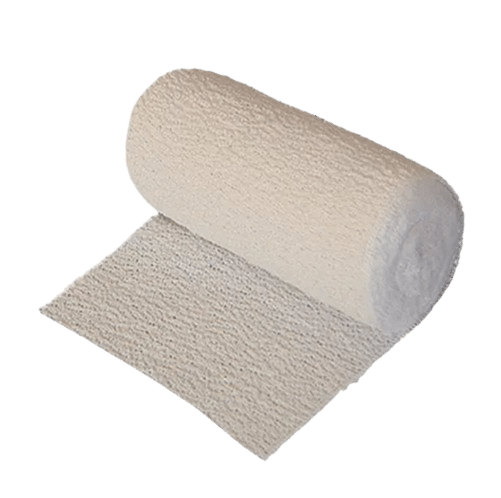
This crepe bandage helps a sprained ankle or a strained knee feel held rather than loose, and the even pressure it puts on the limb is what brings the swelling down over the first days when movement hurts most. It measures 15 cm wide by 4.5 metres long, which is the six-inch width, and it stretches, so one bandage adapts to an ankle, a knee, a wrist or a calf.
It is washable and reusable, which makes it the one item in a first-aid box you buy once rather than replace. What it gives is support and compression. It stops short of holding a joint still the way a splint or a cast does, and knowing that distinction is what keeps somebody from strapping up an injury that needed an X-ray.
How to Put a Crepe Bandage On
Start at the point furthest from the heart and work towards it, so an ankle is wrapped from the toes upward and a wrist from the hand towards the elbow. Wrapping the other way pushes fluid into the hand or the foot rather than away from it.
Overlap each turn by about half the width of the bandage, keeping the tension even as you go rather than pulling harder over the sore part. Smooth out wrinkles as they appear, because a ridge of fabric becomes a pressure line on the skin within an hour. Finish above the injury and secure it with the clip or the adhesive provided. It should feel firm and supportive, and you should still be able to slide a finger under the edge.
The Check That Matters: Fingers and Toes
A bandage that is too tight does more harm than no bandage at all, and the limb tells you long before the skin does. Look at the fingers or toes beyond the bandage about ten minutes after you put it on, and again before bed.
Loosen it immediately for numbness, tingling or pins and needles, for fingers or toes that look pale, blue or dusky, for skin that feels cold compared with the other side, for pain that is increasing rather than settling, or for swelling appearing beyond the end of the bandage. Any of those means the bandage is restricting the blood supply rather than supporting the joint. Take it off, let the limb recover, and re-apply it more loosely. Where the symptoms stay after the bandage is off, please come and see us the same day.
When to Wear It and When to Take It Off
Use it during the day while you are up and moving, when the limb needs the support, and take it off at night. Lying down takes the load off the joint anyway, and a bandage left on through sleep goes unchecked by somebody who is asleep.
Alongside it, the old advice still works for the first day or two: rest the limb, apply something cold wrapped in a cloth for about twenty minutes at a time rather than ice straight onto skin, keep the limb raised above the level of the heart where you can, and start moving it gently as the pain allows rather than keeping it still for a week. Please ask our pharmacist about something for the pain at the same time, and come and see us if the swelling or the pain is no better after two or three days.
Please Have These Looked At Instead of Bandaged
A bandage is for a soft-tissue injury that will heal on its own. Some injuries look the same at the kerbside and are not, and strapping them up delays the treatment they actually need.
Please see our doctor the same day if the limb looks deformed or out of shape, if weight on it has become impossible or the hand has stopped working, if the pain is severe or sitting over a bone rather than over the soft tissue, if there was a crack or a snap at the moment of injury, if there is numbness that was there before any bandage went on, if the swelling came up within minutes, or if the injury involves a child’s growing bones. A knee that gives way, locks or stays bent also wants assessing rather than wrapping.
Some Legs Should Not Be Bandaged Without Advice
Compression is a treatment, and on the wrong limb it is a risk. There are three situations where it wants our doctor’s view before the bandage goes on.
Diabetes, where reduced sensation in the feet means a bandage that is too tight may not be felt until damage is done. Poor circulation or known arterial disease in the legs, where added pressure reduces an already limited blood supply. And any numbness or loss of sensation in the limb from any cause, for the same reason. Please also come to us rather than self-treating a leg that is swollen on one side only with calf pain and warmth, because that needs ruling out properly rather than compressing.
Washing It and Keeping the Stretch
Wash it by hand in warm water with a mild soap, rinse it well and let it air-dry flat or over a line rather than on a radiator or in strong sun, both of which cook the elastic out of it.
Roll it up rather than folding it, which keeps the edges from creasing into ridges, and store it somewhere dry. Replace it once it has lost its stretch: a bandage that has stopped springing back has to be pulled tighter to give the same support, and that is precisely how a limb gets marked. Keep the clips with the roll, because they are the first thing to go missing and an adhesive tape or a safety pin placed over a joint is a poor substitute.
What We Can Honestly Tell You
At this price every household should own two: one in use and one in the wash. Our pharmacist will show you how to wrap an ankle properly the first time, which takes three minutes and is the difference between support and a tourniquet.
It belongs with the rest of a working first-aid box: povidone-iodine for the graze that came with the fall, alcohol prep pads for preparing intact skin, and a digital thermometer. Please ask us about gauze, tape, a cold pack and something for the pain, and about a proper ankle or knee support where an injury keeps recurring.
Is This Crepe Bandage Right for You?
Please talk to our pharmacist or our doctor before you buy if any of these apply.
- Diabetes, poor circulation, arterial disease or numbness in the limb. Compression needs our doctor’s view first, because a bandage that is too tight may go unfelt.
- A limb that looks deformed, is too painful to stand on, hurt with a crack or a snap, or swelled within minutes. Please be seen the same day rather than bandaged.
- Numbness, tingling, pale or blue fingers or toes, coldness, or pain increasing after the bandage went on. Loosen it at once, and see us if it persists.
- One leg swollen with calf pain and warmth. Please come to us rather than compressing it.
- Swelling or pain no better after two or three days. Come and see our doctor.
- A bandage that has lost its stretch. Replace it rather than pulling it tighter, which is how a limb gets marked.
Where to Buy this crepe bandage in Kenya
Order online and we deliver countrywide, or collect from our pharmacy at Kahawa Sukari Shopping Center, Nairobi. We send orders to Nairobi and every neighbourhood around it — the CBD, Westlands, Parklands, Gigiri, Muthaiga, Runda, Rosslyn, Kitisuru, Lower Kabete, Lavington, Kileleshwa, Kilimani, Karen, Langata, South B, South C, Eastleigh, Buruburu, Donholm, Embakasi, Ngong Road, Kasarani, Roysambu, Zimmerman, Githurai, Ruaka, Banana Hill, Two Rivers, Village Market and Pride Lands — and across Kiambu, Thika, Juja, Ruiru, Kikuyu, Limuru and Ngong.
Beyond the capital we deliver to Mombasa, Kisumu, Nakuru, Eldoret, Nyeri, Machakos, Athi River, Kitengela, Kajiado, Naivasha, Narok, Kericho, Bomet, Kisii, Migori, Homa Bay, Siaya, Bungoma, Busia, Kakamega, Vihiga, Webuye, Kitale, Nandi Hills, Iten, Kapenguria, Embu, Meru, Chuka, Kerugoya, Murang’a, Othaya, Nyahururu, Nanyuki, Maralal, Isiolo, Marsabit, Moyale, Wajir, Mandera, Garissa, Lodwar, Kitui, Mwingi, Makueni, Emali, Kibwezi, Voi, Taveta, Wundanyi, Mariakani, Diani, Ukunda, Kilifi, Watamu, Malindi, Lamu and Hola. Everything in this category travels in plain outer packaging with nothing on the outside to say what is inside, and the delivery note carries our name and no product description. At during the day, off at night a pack covers a known length of time, so tell us how many months you want covered and we will work out the quantity with you before you order.
Across Africa, ask us before you order. We have sent orders to Uganda, Tanzania, Somaliland and as far as Malawi, and we will quote for Rwanda, Burundi, South Sudan, Ethiopia, Zambia, Zimbabwe, Botswana, Mozambique, Nigeria, Ghana, South Africa and the rest of the continent. Tell us the destination and we will confirm any import paperwork before the parcel leaves us.
Living abroad? Order from wherever you are and we deliver to your family here in Kenya. Kenyans in the UK, the United States, Canada, South Africa and the Gulf order from us regularly for parents and relatives at home. An elastic compression bandage is needed every day rather than occasionally, so running out is the thing to plan against. Tell us who it is for, the size and how many months you want covered, and we will set up a standing monthly delivery so nobody is ever caught short.
Why Buy Your this crepe bandage from HealthAlone Kenya?
HealthAlone is a pharmacist-led health ecosystem licensed by the Pharmacy and Poisons Board, and our stock is original, sealed and correctly stored. Kahawa Sukari is a real counter with real pharmacists behind it.
Our pharmacists will show you how to wrap an ankle properly the first time, check whether compression suits your circulation, and add a cold pack, gauze and something for the pain. Our doctor is here too if you would rather have the whole question looked at properly.
It is one more step in our vision: building Africa’s most trusted health ecosystem, accessible to everyone, everywhere.
Your Questions About This Crepe Bandage, Answered
What size is it?
15 cm wide by 4.5 metres long, which is the six-inch width. It stretches, so one bandage suits an ankle, a knee, a wrist or a calf.
Which way do I wrap?
Start furthest from the heart and work towards it, so an ankle goes from the toes upward. Wrapping the other way pushes fluid into the foot rather than away.
How much should each turn overlap?
About half the width of the bandage, with even tension throughout rather than pulling harder over the sore part.
How tight is tight enough?
Firm and supportive, with room to slide a finger under the edge. Smooth out wrinkles, because a ridge becomes a pressure line within an hour.
How do I know it is too tight?
Numbness, tingling, pale or blue fingers or toes, skin colder than the other side, pain increasing rather than settling, or swelling beyond the end of the bandage. Loosen it at once.
When should I check?
About ten minutes after putting it on, and again before bed.
Should I sleep in it?
Take it off at night. Lying down takes the load off anyway, and a bandage goes unchecked by somebody who is asleep.
Will it hold a broken bone?
It gives support and compression rather than immobilisation. A deformed limb, one too painful to stand on, or an injury that cracked or snapped needs seeing the same day.
What else should I be doing in the first days?
Rest it, something cold wrapped in a cloth for about twenty minutes at a time rather than ice on skin, keep the limb raised, and start moving it gently as the pain allows.
I have diabetes. Can I use it?
Please ask our doctor first. Reduced sensation means a bandage that is too tight may not be felt until damage is done. The same applies to poor circulation.
Can I wash it?
Yes. By hand in warm water with a mild soap, rinsed well and air-dried flat or on a line, away from a radiator or strong sun, which cook the elastic out of it.
How should I store it?
Rolled rather than folded, somewhere dry, with the clips kept inside the roll.
When should I replace it?
When it has lost its stretch. A slack bandage has to be pulled tighter for the same support, and that is how a limb gets marked.
Where can I buy Crepe Bandage 6″ in Kenya, and what does it cost?
From HealthAlone, online for delivery countrywide or over the counter at Kahawa Sukari Shopping Center, Nairobi. The current price is shown above. We deliver across Nairobi — the CBD, Westlands, Parklands, Gigiri, Muthaiga, Runda, Kitisuru, Lavington, Kilimani, Karen, Langata, South B, South C, Eastleigh, Kasarani, Roysambu, Githurai, Ruaka and Banana Hill — and to Kiambu, Thika, Juja, Ruiru, Kikuyu, Limuru, Ngong, Mombasa, Kisumu, Nakuru, Eldoret, Nyeri, Machakos, Kitengela, Naivasha, Narok, Kericho, Kisii, Migori, Homa Bay, Bungoma, Busia, Kakamega, Kitale, Embu, Meru, Nanyuki, Nyahururu, Isiolo, Marsabit, Wajir, Mandera, Garissa, Lodwar, Kitui, Makueni, Voi, Taveta, Mariakani, Diani, Ukunda, Kilifi, Watamu, Malindi and Lamu. Outside Kenya we have delivered to Uganda, Tanzania, Somaliland and Malawi, and we quote for Rwanda, Burundi, South Sudan, Ethiopia, Zambia, Zimbabwe, Nigeria, Ghana, South Africa and the rest of Africa on request. Tell us which joint it is for and whether there is diabetes or circulation trouble in the family.