
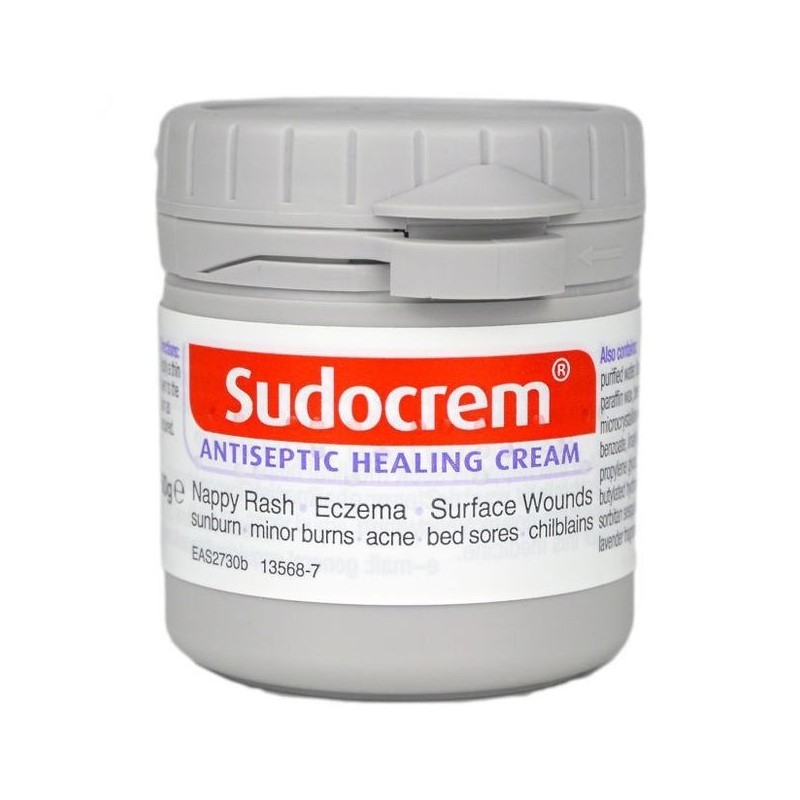
Buy Sudocrem Online in Kenya – Sudocrem Antiseptic Healing Cream 60g
Sudocrem is the thick white barrier cream most Kenyan parents know by name — bought for nappy rash first, then used for most of the small skin problems a household runs into. It is built on zinc oxide, which forms a protective barrier and calms inflamed skin, with a mild antiseptic and a local soothing agent alongside it.
At HealthAlone, a licensed, pharmacist-led Kenyan health store, you get the original sealed pot and a straight account of how to use it — including the two mistakes almost everyone makes.
What Is in Sudocrem
Zinc oxide does most of the work. It forms a water-repellent barrier that protects a baby’s bottom from urine and stool, and has a mild astringent, drying action on weeping or inflamed skin.
Benzyl benzoate and benzyl cinnamate support the healing of damaged skin. Benzyl alcohol is a mild local anaesthetic and antiseptic, which is why the cream takes the sting out of a graze quickly. Hypoallergenic lanolin softens the skin and helps it spread — a purified grade processed to remove most substances that cause lanolin reactions, but see the note below if you react to wool alcohols.
The Two Mistakes Almost Everyone Makes
Mistake one: putting on far too much. Sudocrem goes on as a thin layer. Most people apply a thick white coating, which looks reassuring and is worse: it hides whether the skin underneath is healing, and empties the pot several times faster than it should. Take a small amount on a fingertip, rub it between your fingers until it turns translucent, then spread thinly. If the skin looks white afterwards, that is too much.
Mistake two: scrubbing the old layer off. The point of a barrier cream is that it stays put. Wipe soiling away gently rather than stripping the skin back to bare, and re-apply thinly over what remains.
Sudocrem for Nappy Rash
Nappy rash is inflammation caused by skin sitting in moisture, urine and stool, made worse by rubbing. The barrier is the treatment: keep the irritants off and the skin heals.
In a hot, humid climate this needs more attention than the pot suggests. Heat and sweat keep the nappy area damp for longer, and cloth nappies — still widely and sensibly used across Kenya — hold moisture against the skin unless changed promptly and dried in the sun. Change nappies more often than feels necessary, and give the skin uncovered air time each day. Ten minutes of dry air does more than any cream, and costs nothing.
See a doctor rather than continuing if the rash spreads beyond the nappy area, has small red spots or pustules at its edges, involves the skin folds, is weeping, or has not improved in a few days. That pattern is often thrush rather than simple nappy rash, and a barrier cream will not clear it.
Can You Use Sudocrem on Acne?
Yes, up to a point. Acne is one of Sudocrem’s licensed uses. Dabbed on a single angry spot at night, the zinc oxide dries it and the antiseptic keeps it clean. As an occasional overnight treatment for one or two blemishes, it is reasonable.
But it is not an acne treatment. It does nothing about the causes of acne — oil production, blocked pores, bacteria, hormones — so it will not stop new spots forming. Spreading it thickly across the whole face overnight, the version of this advice that circulates online, is a bad idea: it is a heavy occlusive cream, and on oily skin it can block pores. If you are getting spots regularly, ask our pharmacist — a proper acne product costs about the same and does the actual job.
What Sudocrem Is Used For
- Nappy rash — the main use, protecting skin while it heals
- Eczema — soothing inflamed patches, alongside a regular emollient
- Cuts, grazes and surface wounds — mildly antiseptic, takes the sting out
- Minor burns and sunburn — small areas, once cooled
- Acne — on individual spots, as above
- Bedsores, chilblains and chafing — protecting fragile or rubbed skin
How to Use Sudocrem
- Wash the area gently and pat dry — do not apply to skin that is still wet.
- Take a small amount on a fingertip and rub it between your fingers until it turns translucent.
- Spread it in a thin layer over the affected skin. If it stays visibly white, that is too much.
- Re-apply as needed — for nappy rash, at every change.
- Cover with a dressing only where appropriate; most uses need nothing on top.
- Keep the pot clean — use a clean fingertip or cotton bud rather than dipping with soiled hands.
A Safety Point Nobody Mentions
Fabric that has been in contact with this cream burns more easily — clothing, bedding, bandages and dressings — and the risk stays after washing, because residue builds up in the fibres.
This matters more in Kenyan homes than where the warning is usually printed, because open flames are part of daily life here — jikos, gas rings, kerosene lamps, candles during an outage. If the cream is used regularly on the body, keep away from naked flames and do not smoke near treated skin or bedding. It applies to every zinc, paraffin and emollient cream, not only this one, and almost nobody is told.
Who Is It For, and Who Should Take Care
It suits babies and children with nappy rash, families wanting one dependable cream for everyday skin problems, anyone with chafing or grazes, and people caring for someone confined to bed.
Take care, or ask first, if: the baby is a newborn under four weeks old, since the preservative can cause local irritation and is best discussed with a doctor or our pharmacist; you have a known lanolin or wool alcohol allergy, because the lanolin here is a purified hypoallergenic grade but is still lanolin; or you are treating a large area of broken skin.
Safety note: for external use only. Keep away from the eyes and mucous membranes, and rinse with clean water if it gets in the eyes. Do not use if you are sensitive to any ingredient, including lanolin, benzyl alcohol or benzyl benzoate. Apply thinly. Do not use on deep or dirty wounds, on bites, or on large burns — those need medical attention. Cool a minor burn under running water for twenty minutes before applying anything. Fabric that has been in contact with this product burns more easily, and washing does not fully remove the residue — keep away from naked flames, jikos and cigarettes. Ask a doctor or our pharmacist before use on a baby under four weeks old, and stop if the skin becomes more irritated, red or swollen. See a doctor if a rash spreads beyond the nappy area, involves the skin folds, shows spots or pustules at the edges, is weeping, or has not improved within a few days; if a wound becomes hot, swollen or discharges pus; or if eczema is widespread or worsening. Keep out of reach of children. This cream protects and soothes the skin while it heals; it does not treat or cure eczema, acne or any underlying condition.
Why Buy Sudocrem from HealthAlone Kenya?
Sudocrem is widely counterfeited and repackaged, and a pot bought loose from an unverified seller may not be what the label says. HealthAlone is a pharmacist-led African health ecosystem, licensed by the Pharmacy and Poisons Board. Everything we sell is original, sealed and correctly stored, and you will see the current price right on this page, always accurate rather than a figure gone stale elsewhere. This page has already told you to use less than you think, that the whole-face acne trick is a bad idea, and that a rash in the skin folds is probably not ordinary nappy rash — we would rather be the store that says so.
We deliver across Nairobi and all major Kenyan towns — Mombasa, Kisumu, Nakuru, Eldoret, Thika and beyond — and we serve customers across East Africa, including Tanzania and Uganda. You can also collect your order at our shop at Kahawa Sukari Shopping Center, Nairobi. Living abroad? Order online from the US or UK and we deliver to your family in Kenya. It is one more step in our vision: building Africa’s most trusted health ecosystem, accessible to everyone, everywhere.
Frequently Asked Questions
What is Sudocrem used for?
It is a zinc oxide barrier cream licensed for nappy rash, eczema, cuts and grazes, minor burns, sunburn, bedsores, chilblains and acne. The zinc oxide forms a protective barrier and calms inflamed skin, while a mild antiseptic and a local soothing agent help with stinging and keep small wounds clean. Most households buy it for nappy rash and then find they use it for everything else.
How much Sudocrem should I use?
Far less than most people use. Take a small amount on a fingertip, rub it between your fingers until it turns from white to translucent, then spread it thinly. If the skin still looks white afterwards, that is too much — a thick coating stops you seeing whether the skin is healing, is unpleasant to remove, and empties the pot several times faster than necessary.
Can I use Sudocrem on my face for acne?
On individual spots, yes — acne is one of its licensed uses, and dabbed on one angry spot overnight the zinc oxide dries it while the antiseptic keeps it clean. Spreading it across the whole face is a different matter and not a good idea: it is a heavy occlusive cream and on oily or acne-prone skin it can block pores. It also does nothing about what causes acne, so it will not stop new spots forming. If you are getting spots regularly, ask our pharmacist about a proper acne product instead.
Is Sudocrem safe for newborn babies?
Ask a doctor or our pharmacist first for a baby under four weeks old. The preservative in it can cause local irritation and is best discussed for very young infants. For older babies it is widely used for nappy rash, applied thinly at each change. Whatever the age, see a doctor if the rash spreads beyond the nappy area, involves the skin folds, shows small red spots or pustules at the edges, or has not improved within a few days — that pattern often means thrush, which a barrier cream will not clear.
Does it contain lanolin?
Yes, a purified hypoallergenic grade, processed to remove most of the substances that cause lanolin reactions. That makes a reaction much less likely, but it is still lanolin, so if you have a known lanolin or wool alcohol allergy, ask our pharmacist before using it. The cream also contains benzyl alcohol and benzyl benzoate, worth knowing if you have reacted to those before.
Can I use it on eczema?
It can soothe an inflamed patch, and eczema is one of its licensed uses, but it is not a substitute for a proper emollient. Eczema is managed by moisturising regularly and generously with an emollient and switching away from harsh soap; a barrier cream used occasionally does not replace that. Use it on a sore, weeping patch if it helps, and ask our pharmacist which emollient should be doing the daily work.
How is it different from petroleum jelly?
Petroleum jelly is a pure barrier and nothing else — it seals moisture in and irritants out, with no active effect on the skin. This cream does that too, through zinc oxide, but adds a mild astringent action that helps dry weeping skin, plus a mild antiseptic and a local soothing agent for stinging. For a simple dry patch, petroleum jelly is cheaper and fine. For skin that is inflamed, broken or sore, the difference is worth having.
How much does Sudocrem cost in Kenya?
You will see the current price of the 60g pot right on this page, always up to date — we keep it accurate rather than publishing figures that go stale elsewhere. Used correctly, in thin layers, a pot of this size lasts a great deal longer than most people expect, so judge it on how long it lasts rather than on the sticker. Larger pots work out cheaper per gram if you are treating a baby daily; ask us which size makes sense for how you will use it.
Where can I buy Sudocrem in Kenya?
You can buy Sudocrem Antiseptic Healing Cream online at HealthAlone, a licensed Kenyan health store. We deliver across Nairobi, Mombasa, Kisumu, Nakuru, Eldoret, Thika and the rest of Kenya, and we serve customers in East Africa, including Tanzania and Uganda. You can also buy it in person at our shop at Kahawa Sukari Shopping Center, Nairobi, where our pharmacist can advise you directly.