

What KidZinc Lozenges Do
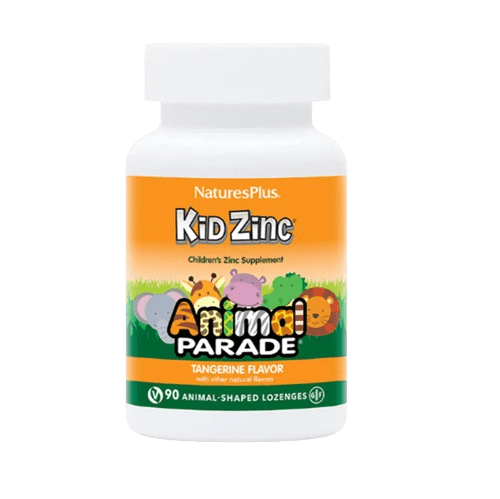
KidZinc lozenges help your child’s immune system work normally and protect their cells from oxidative stress, with 8 mg of chelated zinc in one tangerine-flavoured, animal-shaped lozenge.
Both of those are recognised benefits for zinc rather than general claims, and this product reaches them comfortably — the threshold is 1.5 mg a day and there is 8 mg in a single lozenge. The zinc is chelated, as zinc aspartate and zinc monomethionine, alongside named extracts of echinacea, olive leaf, slippery elm and ginger. There are 90 lozenges in the bottle.
One a Day, for Children 2 and Over — and Why the Number Matters
This is the part of the page we would most want a parent to read, so it comes before anything else.
The manufacturer’s instruction is one lozenge daily for children aged 2 years and over. One. Not one when they ask and another later.
Here is the arithmetic behind that. The tolerable upper intake level for zinc — the most that is considered safe every day from all sources together — is 7 mg for children aged 1 to 3, 10 mg for 4 to 6, and 13 mg for 7 to 10. A single lozenge contains 8 mg. So for the youngest children in range, one lozenge already sits at the top of the daily allowance, and two lozenges would exceed the limit for any child under 11.
What that means in practice, plainly. This is a supplement that happens to taste like a sweet, and it needs treating as the former. Keep the bottle out of reach and out of sight, give the lozenge yourself rather than letting a child take one, and if your child has had more than one in a day, ring us and ask. For a child under 2, please speak to our pharmacist or our doctor before giving any of it — there is no instruction on the bottle for that age.
And because it is a lozenge, have your child sit down to take it. A hard lozenge is something a small child can choke on, so no running about with one in the mouth, and stay with them while it dissolves.
What Is in One KidZinc Lozenge
Zinc, 8 mg, organically chelated. As zinc aspartate and zinc monomethionine, which are well-absorbed forms. The 8 mg is elemental zinc — the zinc itself rather than the weight of the compound carrying it.
A named herbal blend: echinacea, olive leaf, slippery elm and ginger. No amounts are stated for any of the four, so we name them as ingredients and attach nothing to them.
Tangerine flavour, animal-shaped, vegetarian, hypo-allergenic and gluten free.
One figure the bottle leaves open, and we would rather say so than guess. No amount is given for the echinacea, the olive leaf, the slippery elm or the ginger, so the quantity of each in a lozenge stays unknown and we leave it that way rather than estimating. The zinc figure is the one that is published and the one that matters for dosing, which is why the dose and the age sit at the top rather than the bottom.
Why Zinc Is Worth Giving a Child at All
Zinc is one of the better-evidenced minerals in a child’s diet, and the recognised list is long.
Normal function of the immune system and protection of cells from oxidative stress are the two this product leads on, and both are comfortably met at 8 mg.
Zinc also has recognised roles in normal DNA synthesis, normal protein synthesis, the maintenance of normal bones, skin, hair and nails, normal cognitive function, normal vision, normal carbohydrate and fatty acid metabolism, and normal acid-base metabolism. Fourteen in all, which is why it turns up in so many children’s formulas.
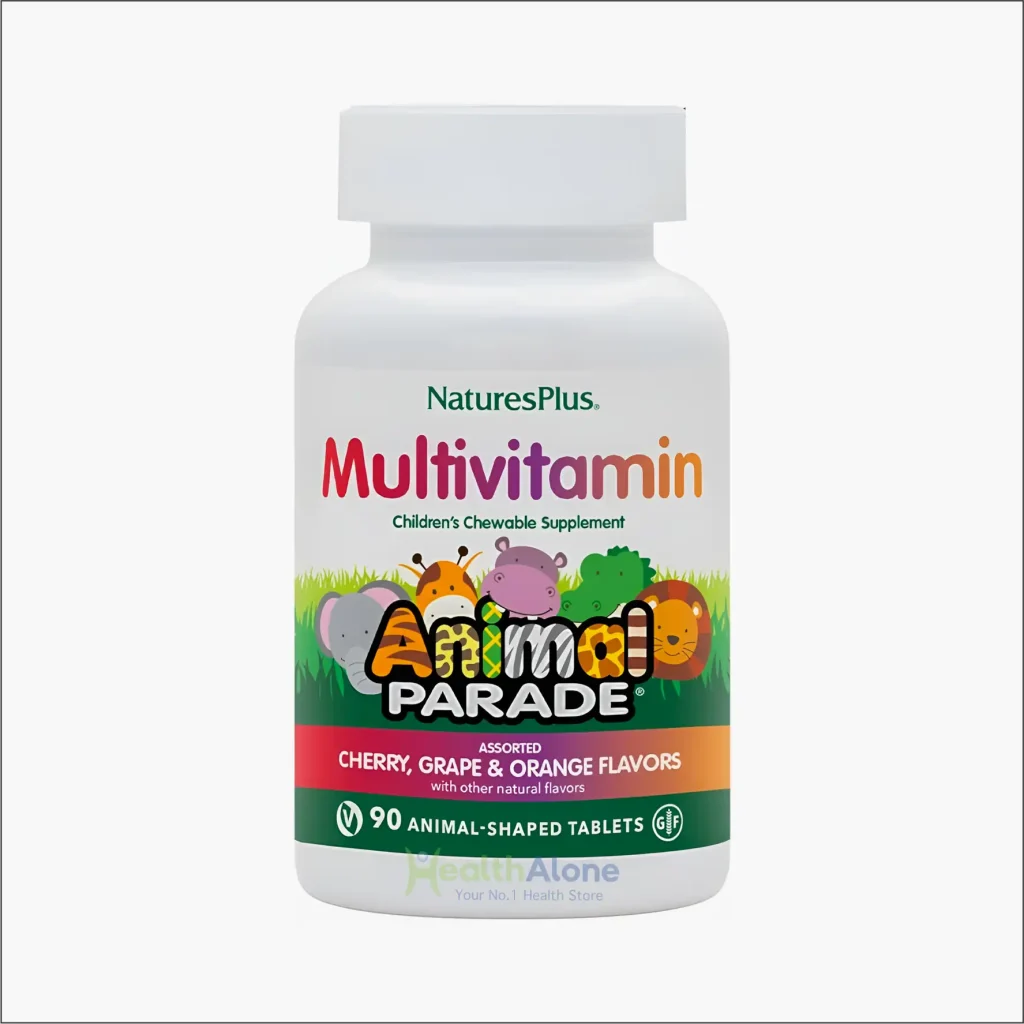
Which is also the reason to count it carefully. If your child already takes a multivitamin, it almost certainly contains zinc. Our own Animal Parade children’s multivitamin has 3 mg a serving, and the Animal Parade immune chewable contains zinc too. Adding an 8 mg lozenge on top of either is exactly the sum a parent should not have to do alone, so please bring the labels to the counter and our pharmacist will do it with you in two minutes.
How to Give It
One lozenge a day, for children 2 years and over, sitting down, with an adult present. At one a day a 90-lozenge bottle covers three months.
Many parents use zinc seasonally rather than year-round, around school terms or a run of colds in the house. That is a reasonable way to use a bottle this size, and our pharmacist can suggest a pattern that suits your child instead of a continuous habit.
Is KidZinc Right for Your Child?
- One lozenge a day is the limit, and the limit is the point. 8 mg sits at or above the safe daily maximum for children aged 1 to 3, and two lozenges would exceed it for any child under 11. Store it out of reach and give the dose yourself.
- If your child takes a multivitamin or any other zinc product. Bring every label to the counter. This is the single most likely way a child goes over a zinc upper limit, and it takes two minutes to prevent.
- If your child is under 2. Please ask our pharmacist or our doctor first. The bottle gives no instruction for that age and we would rather give you one that fits.
- Have them sit down to take it. A hard lozenge is a choking risk for a small child. Stay with them while it dissolves.
- If your child has a medical condition or takes any medicine. Zinc can affect how some medicines are absorbed, so please speak to our pharmacist before you start, and keep giving whatever has been prescribed.
Where to Buy Animal Parade KidZinc Lozenges in Kenya
Order online and we deliver countrywide, or collect from our pharmacy at Kahawa Sukari Shopping Center, Nairobi. We send orders to Nairobi and every neighbourhood around it — the CBD, Westlands, Parklands, Gigiri, Muthaiga, Runda, Rosslyn, Kitisuru, Lower Kabete, Lavington, Kileleshwa, Kilimani, Karen, Langata, South B, South C, Eastleigh, Buruburu, Donholm, Embakasi, Ngong Road, Kasarani, Roysambu, Zimmerman, Githurai, Ruaka, Banana Hill, Two Rivers, Village Market and Pride Lands — and across Kiambu, Thika, Juja, Ruiru, Kikuyu, Limuru and Ngong.
Beyond the capital we deliver to Mombasa, Kisumu, Nakuru, Eldoret, Nyeri, Machakos, Athi River, Kitengela, Kajiado, Naivasha, Narok, Kericho, Bomet, Kisii, Migori, Homa Bay, Siaya, Bungoma, Busia, Kakamega, Vihiga, Webuye, Kitale, Nandi Hills, Iten, Kapenguria, Embu, Meru, Chuka, Kerugoya, Murang’a, Othaya, Nyahururu, Nanyuki, Maralal, Isiolo, Marsabit, Moyale, Wajir, Mandera, Garissa, Lodwar, Kitui, Mwingi, Makueni, Emali, Kibwezi, Voi, Taveta, Wundanyi, Mariakani, Diani, Ukunda, Kilifi, Watamu, Malindi, Lamu and Hola. At one lozenge a day a pack runs for a known length of time, so tell us the pack size you want and we will work out how many months that covers before you order.
Across Africa, ask us before you order. We have sent orders to Uganda, Tanzania, Somaliland and as far as Malawi, and we will quote for Rwanda, Burundi, South Sudan, Ethiopia, Zambia, Zimbabwe, Botswana, Mozambique, Nigeria, Ghana, South Africa and the rest of the continent. Tell us the destination and we will confirm any import paperwork before the parcel leaves us.
Living abroad? Order from wherever you are and we deliver to your family here in Kenya. Kenyans in the UK, the United States, Canada, South Africa and the Gulf order from us regularly for parents and relatives at home. A children’s zinc like this one taken steadily month after month does far more than a single pack, so tell us who it is for and how many months you want covered and we will set up the repeat.
Why Buy Your Animal Parade KidZinc Lozenges from HealthAlone Kenya?
HealthAlone is a pharmacist-led health ecosystem licensed by the Pharmacy and Poisons Board, and our stock is original, sealed and correctly stored. Kahawa Sukari is a real counter with real pharmacists behind it.
Our pharmacists will add up the zinc across everything your child already takes, and tell you plainly whether they need this on top. Our doctor is here too if you would rather have the whole question looked at properly.
It is one more step in our vision: building Africa’s most trusted health ecosystem, accessible to everyone, everywhere.
Frequently Asked Questions
How many KidZinc lozenges a day, and from what age?
One lozenge daily, for children 2 years and over. That is the manufacturer’s own instruction and it is worth following exactly, because 8 mg of zinc in one lozenge already sits at or above the safe daily maximum for the youngest children in that range. For a child under 2, please ask our pharmacist or our doctor first.
What happens if my child has more than one?
Please ring us and ask rather than waiting to see. The safe daily upper limit for zinc is 7 mg for ages 1 to 3, 10 mg for 4 to 6 and 13 mg for 7 to 10, so two lozenges would take any child under 11 over it. Too much zinc at once usually causes stomach upset and nausea; the concern with repeated excess is that it interferes with copper. Keep the bottle out of reach and give the lozenge yourself — it tastes like a sweet and children ask for another.
What does the zinc actually do?
Two recognised benefits are the reason to give it: zinc contributes to the normal function of the immune system, and to the protection of cells from oxidative stress. Both need 1.5 mg a day and this lozenge has 8 mg. Zinc also has recognised roles in DNA and protein synthesis, bones, skin, hair, nails, cognitive function and vision — fourteen in all.
My child already takes a multivitamin. Can they have this too?
Ask us first, and bring both labels. Most children’s multivitamins contain zinc — the Animal Parade multivitamin has 3 mg a serving — and adding an 8 mg lozenge on top is the commonest way a child goes over a zinc upper limit. Our pharmacist will add up everything in two minutes.
What are the echinacea, olive leaf, slippery elm and ginger for?
They are named on the bottle as a herbal blend, with no amounts given for any of the four. No approved health claim exists for any of them, so we list them as ingredients and attach nothing to them. The zinc is what carries the recognised benefits here.
Is a lozenge safe for a small child?
Have them sit down to take it, with an adult present, and stay while it dissolves. A hard lozenge is a choking object for a toddler before it is a supplement, and neither the bottle nor most listings say so.
How long does a bottle last?
Three months at one lozenge a day. Many parents use zinc seasonally instead — around school terms or a run of colds in the house — and our pharmacist can suggest a pattern rather than a continuous habit.
Is it vegetarian, and does it contain allergens?
The manufacturer states it is vegetarian, hypo-allergenic and gluten free. Please still read your own bottle, and if your child has a diagnosed allergy bring it to our pharmacist before the first lozenge.
Can I give it alongside my child’s medicine?
Please check with our pharmacist first. Zinc can affect how some medicines are absorbed, so it is worth a look at the actual list, and keep giving whatever has been prescribed.
Is the 8 mg the zinc or the compound?
The zinc itself. It is 8 mg of elemental zinc from zinc aspartate and zinc monomethionine, not 8 mg of the compounds, so the figure you compare against an upper limit is the full 8 mg.
Where can I buy KidZinc lozenges in Kenya, and what does it cost?
From HealthAlone, online for delivery countrywide or over the counter at Kahawa Sukari Shopping Center, Nairobi. The current price is shown at the top of this listing. We deliver across Nairobi — the CBD, Westlands, Parklands, Gigiri, Muthaiga, Runda, Kitisuru, Lavington, Kilimani, Karen, Langata, South B, South C, Eastleigh, Kasarani, Roysambu, Githurai, Ruaka and Banana Hill — and to Kiambu, Thika, Juja, Ruiru, Kikuyu, Limuru, Ngong, Mombasa, Kisumu, Nakuru, Eldoret, Nyeri, Machakos, Kitengela, Naivasha, Narok, Kericho, Kisii, Migori, Homa Bay, Bungoma, Busia, Kakamega, Kitale, Embu, Meru, Nanyuki, Nyahururu, Isiolo, Marsabit, Wajir, Mandera, Garissa, Lodwar, Kitui, Makueni, Voi, Taveta, Mariakani, Diani, Ukunda, Kilifi, Watamu, Malindi and Lamu. Outside Kenya we have delivered to Uganda, Tanzania, Somaliland and Malawi, and we quote for Rwanda, Burundi, South Sudan, Ethiopia, Zambia, Zimbabwe, Nigeria, Ghana, South Africa and the rest of Africa on request. At one lozenge a day a 90-lozenge bottle covers three months, so tell us how many you want and we will set up the repeat.