


Cervical Immobilizer: a Two-Piece Rigid Collar for the Firmest Hold on This Shelf
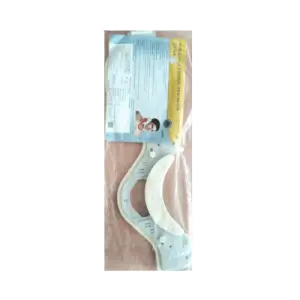
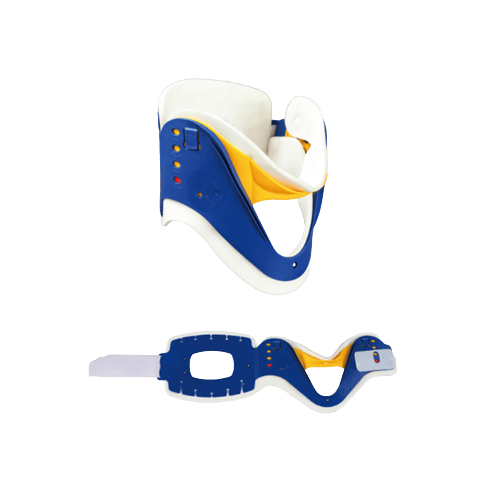
This cervical immobilizer stops the neck bending, nodding and turning, so a seriously injured or recently operated neck is held still while the structures around it settle. It comes in two halves, a front piece under the chin and a back piece behind the neck, which is how a collar gets a firm hold well beyond a single band: the two shells overlap at the sides and strap to each other.
It is the firmest support we stock and the one our doctor reaches for after a significant injury, after neck surgery, or where somebody has to be moved and the neck needs protecting on the way. It is also the one product on this shelf to buy only after being examined, and our pharmacist will say so before selling you one.
Please Read This Before You Buy a Collar
An ordinary stiff neck wants the opposite of a collar. For everyday neck pain and for ordinary whiplash after a knock, current guidance points the other way: keep moving and carry on as usual rather than holding the neck still. Pooling the trials that compared a collar with an active approach after whiplash, the pain results favour the active approach, and one trial found that people who carried on as usual had less pain at six months than those given a collar.
And a rigid collar worn for a long time causes its own problems. A review pooling 25 studies found a 7% rate of pressure sores with prolonged hard collar use, with difficulty swallowing among the other common complications, and the authors concluded there is significant harm from prolonged hard collar immobilisation even in younger patients.
So this is a short-term device with an indication and an end date. Our doctor decides both. If you have an aching neck from a desk or a pillow, please ask our pharmacist instead and let us sell you nothing at all, which happens more often than you would think.
When a Two-Piece Rigid Collar Is the Right Answer
After neck surgery, where the surgical team has specified a rigid collar and for how long.
After a significant neck injury that has been imaged and assessed, as a step down from hospital care.
Where somebody has to be moved or transported and the neck needs protecting on the journey.
Where a one-piece hard collar is not holding firmly enough, which is the practical reason to step up from the Dyna hard cervical collar to this one.
Outside those, our Kedley soft neck collar is what mild neck pain and stiffness actually calls for, and it costs less than half as much.
Fitting It and Checking the Skin
Fit it sitting down with the head facing straight forward and level, chin neither tucked down nor lifted. The position it is fitted in is the position it holds, and a collar fitted with the chin up holds the neck extended for as long as it is on.
Back piece first, then the front, with the chin seated properly in the chin rest before you fasten the side straps. Fasten them evenly, firm enough to keep the collar from sliding and loose enough to get a finger under the edge.
Then check the skin every day, and check these places specifically: under the chin, the back of the head, both shoulders where the shells rest, and the collar bones. A red mark that stays red when you press it is the early warning of a pressure sore, and it needs the fit adjusted and our doctor told that day.
Watch for trouble swallowing, which is one of the commoner problems with a rigid collar and usually means the chin piece is set too high. Tell our pharmacist or our doctor rather than persevering.
Keep the pads dry, wipe the shells rather than soaking them, and let everything dry fully before it goes back on.
Coming Out of It
Come out of it when our doctor says, not when it feels comfortable. A neck held still for weeks stiffens and the muscles that hold the head up weaken, so the way out matters as much as the way in.
Expect the neck to feel strange and weak for the first days out of a rigid collar. That is the muscles coming back, and it settles with use.
Then get the neck moving, within what our doctor allows: gentle turning and nodding first, then holding positions, then normal activity. A physiotherapist is worth the visit here, and our pharmacist can point you to one.
For somebody spending long hours sitting or lying while they recover, ask our pharmacist about a wedge pillow for a controlled angle in bed.
Is a Cervical Immobilizer Right for You?
This collar suits serious injuries and post-operative necks, under instruction. Please speak to our doctor before buying one if any of these apply:
- Nobody has examined the neck. Please see our doctor or go to a hospital first. Whether anything is injured comes before which collar to buy, and this is an expensive way to get that order wrong.
- There is numbness, tingling or weakness in an arm or a hand, or any trouble with the legs or with passing water. Go to a hospital today rather than buying a collar.
- The neck was hurt in a fall from height, a dive into water, a high-speed crash, or any heavy impact, or the person is over 65. Those need assessing rather than supporting.
- You have an ordinary stiff or aching neck. Ring us. A collar is very probably the wrong purchase and our pharmacist will tell you so.
- It is for a child. Children’s necks are not small adults’ necks. Our doctor should see any child who has hurt a neck badly enough to consider this.
Our pharmacists will fit it and show you the daily skin checks, and our doctor will tell you whether you need it at all and when to come out of it.
Where to Buy a Cervical Immobilizer in Kenya
Order online and we deliver countrywide, or collect from our pharmacy at Kahawa Sukari Shopping Center, Nairobi. We send orders to Nairobi and every neighbourhood around it — the CBD, Westlands, Parklands, Gigiri, Muthaiga, Runda, Rosslyn, Kitisuru, Lower Kabete, Lavington, Kileleshwa, Kilimani, Karen, Langata, South B, South C, Eastleigh, Buruburu, Donholm, Embakasi, Ngong Road, Kasarani, Roysambu, Zimmerman, Githurai, Ruaka, Banana Hill, Two Rivers, Village Market and Pride Lands — and across Kiambu, Thika, Juja, Ruiru, Kikuyu, Limuru and Ngong.
Beyond the capital we deliver to Mombasa, Kisumu, Nakuru, Eldoret, Nyeri, Machakos, Athi River, Kitengela, Kajiado, Naivasha, Narok, Kericho, Bomet, Kisii, Migori, Homa Bay, Siaya, Bungoma, Busia, Kakamega, Vihiga, Webuye, Kitale, Nandi Hills, Iten, Kapenguria, Embu, Meru, Chuka, Kerugoya, Murang’a, Othaya, Nyahururu, Nanyuki, Maralal, Isiolo, Marsabit, Moyale, Wajir, Mandera, Garissa, Lodwar, Kitui, Mwingi, Makueni, Emali, Kibwezi, Voi, Taveta, Wundanyi, Mariakani, Diani, Ukunda, Kilifi, Watamu, Malindi, Lamu and Hola. Please speak to our doctor before ordering this one, and tell us what happened to the neck.
Across Africa, ask us before you order. We have sent orders to Uganda, Tanzania, Somaliland and as far as Malawi, and we will quote for Rwanda, Burundi, South Sudan, Ethiopia, Zambia, Zimbabwe, Botswana, Mozambique, Nigeria, Ghana, South Africa and the rest of the continent. Tell us the destination and we will confirm any import paperwork before the parcel leaves us.
Living abroad? Order from wherever you are and we deliver here in Kenya. Kenyans in the UK, the United States, Canada, South Africa and the Gulf order from us regularly for a parent or relative at home, and this is one of the things they order most. Tell us the address and we will deliver and set it up.
Why Buy Your a Cervical Immobilizer from HealthAlone Kenya?
HealthAlone is a pharmacist-led health ecosystem licensed by the Pharmacy and Poisons Board, and our stock is original, sealed and correctly stored. Kahawa Sukari is a real counter with real pharmacists behind it.
This is the one product on this shelf that should not be bought without being examined first. Our doctor will tell you whether you need a collar at all, which one, and when to come out of it.
It is one more step in our vision: building Africa’s most trusted health ecosystem, accessible to everyone, everywhere.
FAQs
What makes a two-piece collar firmer than a one-piece?
It comes in two halves, a front piece under the chin and a back piece behind the neck, and the two shells overlap at the sides and strap to each other. That gives a firm hold against bending, nodding and turning that a single band wrapped round the neck cannot match.
Should I wear a collar for ordinary neck pain?
Please do not, and ask our pharmacist instead. For everyday neck pain and for ordinary whiplash, the guidance points the other way: keep moving and carry on as usual. Pooling the trials that compared a collar with an active approach after whiplash, the pain results favour the active approach, and one trial found people who carried on as usual had less pain at six months.
How long can it be worn?
As long as our doctor says, and no longer. A review pooling 25 studies found a 7% rate of pressure sores with prolonged hard collar use, with difficulty swallowing among the other common complications. A neck held still for weeks also stiffens and the muscles weaken.
What position should the head be in when I fit it?
Facing straight forward and level, chin neither tucked down nor lifted, fitted sitting down. The position it is fitted in is the position it holds, and a collar fitted with the chin up holds the neck extended for as long as it is on.
Which piece goes on first?
The back piece, then the front, with the chin seated properly in the chin rest before you fasten the side straps. Fasten them evenly, firm enough to keep the collar from sliding and loose enough to get a finger under the edge.
Where exactly should I check the skin?
Every day, and in these places: under the chin, the back of the head, both shoulders where the shells rest, and the collar bones. A red mark that stays red when you press it is the early warning of a pressure sore and needs the fit adjusted and our doctor told that day.
It is hard to swallow with it on. Is that normal?
It is one of the commoner problems with a rigid collar and it usually means the chin piece is set too high. Tell our pharmacist or our doctor rather than persevering with it.
Can I sleep in it?
Our doctor will tell you whether you should, and that depends on the injury rather than on the collar. If you are wearing it overnight, the skin checks matter more, not less.
Should I buy this or the hard cervical collar?
The one-piece hard collar is the usual choice and costs less than half as much. This two-piece is for when a one-piece is not holding firmly enough, after neck surgery, or where a surgical team has specified it. Please let our doctor decide rather than buying up on price alone.
What size do I need?
Please tell our pharmacist the measurement round the neck and the distance from the point of the chin to the top of the breastbone, which is the height the collar has to match. A collar too tall forces the chin up and a collar too short does not hold.
What happens when I come out of it?
Expect the neck to feel strange and weak for the first few days, which is the muscles coming back, and it settles with use. Then get the neck moving within what our doctor allows: gentle turning and nodding, then holding positions, then normal activity. A physiotherapist is worth the visit.
How do I clean it?
Keep the pads dry, wipe the shells rather than soaking them, and let everything dry fully before it goes back on. A damp pad against the skin all day is how pressure damage and rashes start.
Where can I buy a cervical immobilizer in Kenya?
Order from HealthAlone online and we deliver countrywide, or collect from our pharmacy at Kahawa Sukari Shopping Center, Nairobi. We deliver across Nairobi — the CBD, Westlands, Parklands, Lavington, Kileleshwa, Kilimani, Karen, Langata, South B, South C, Eastleigh, Buruburu, Donholm, Embakasi, Kasarani, Roysambu, Zimmerman, Githurai and Ruaka — and across Kiambu, Thika, Juja, Ruiru, Kikuyu, Limuru and Ngong, as well as Mombasa, Kisumu, Nakuru, Eldoret, Nyeri, Machakos, Kitengela, Naivasha, Narok, Kericho, Kisii, Bungoma, Kakamega, Kitale, Embu, Meru, Chuka, Murang’a, Nyahururu, Nanyuki, Isiolo, Garissa, Lodwar, Kitui, Voi, Kilifi, Malindi and Diani. Please speak to our doctor before ordering this one.
