


Dyna Reversible Wrist Splint: One Splint That Fits the Left Wrist or the Right
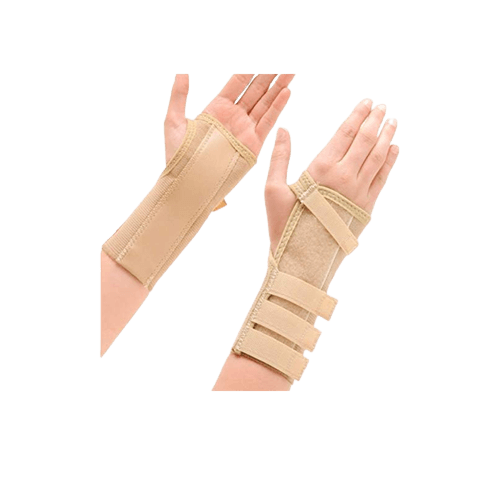
This Dyna reversible wrist splint holds a painful wrist steady and keeps it in the position that takes pressure off the nerve, so carpal tunnel tingling, repetitive strain and tendon pain settle while you keep using the hand. It is reversible, so the same splint fits the left wrist or the right, which matters in a household where more than one person needs one and when the other wrist starts complaining.
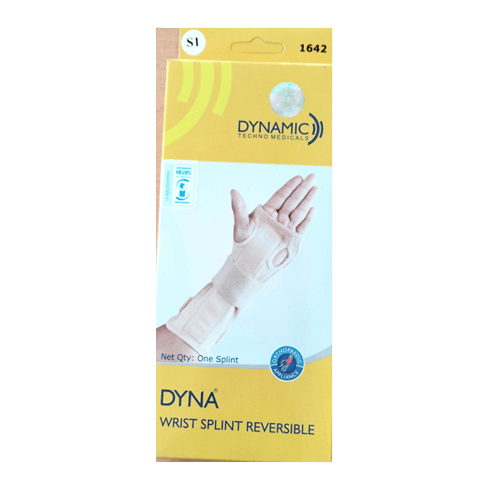
It is made by Dynamic Techno Medical, the carton we hold carries the article number 1642 in size M. A stay runs along the palm side and the fingers and thumb stay completely free, so you can still grip, write and work with the splint on. Our pharmacist measures the wrist, checks the angle the splint is holding and confirms the size before it leaves us.
Why Reversible Matters More Than It Sounds
One splint covers two hands. Buying sided means buying twice when the other wrist starts, and repetitive strain rarely confines itself to one side for long.
It suits a household rather than a person. At 1,740 shillings, a splint two people can share is a different proposition from one that fits only one wrist.
And nobody orders the wrong hand. The commonest return on a sided splint is simply the wrong side, and this one removes that entirely.
What It Is For
Carpal tunnel syndrome, where the thumb, index and middle fingers tingle or go numb at night and you shake the hand to get the feeling back.
Repetitive strain from typing, tills, driving, sewing and assembly work.
Tendon pain and tenosynovitis at the wrist.
A wrist sprain once our doctor has examined it.
And the weeks after a wrist operation, on the surgeon’s instruction.
How Long to Wear It, Which the Research Answers
Nights are where the benefit is. People splinting at night were close to four times as likely to report overall improvement in the short term as people given nothing.
All-day wear may add little. Trials comparing full-time with night-only found no clear advantage to wearing it all day, so you can sleep in it and work without it unless our doctor advises otherwise.
Give it months rather than weeks. Six months of splinting looked better than six weeks for both symptoms and hand function, and most people stop at a fortnight.
And keep expectations level. The certainty of that evidence is low and the average symptom improvement sat below the point people reliably notice, which our pharmacist will tell you honestly. What splinting has going for it is that it is inexpensive, carries no known long-term harm, and is the right thing to try before an injection or an operation.
Getting the Position Right
The wrist should sit straight, or barely tipped back. The nerve has the most room close to neutral, and a wrist bent hard either way squeezes it more. Bring the splint in and our pharmacist will check the angle for you.
The stay stops short of the crease where the fingers fold, so you can still make a fist.
Fasten from the forearm down towards the hand, firm with room for one finger under each strap, then use the hand for a minute and reset it.
Press a fingernail and watch the colour return. Waking with worse numbness, a cold or discoloured hand, or swelling in the fingers means it is too tight.
Care, and What Goes Alongside
Give the skin air if you are wearing it at night, and look at the skin along the strap lines and under the stay each time it comes off.
Keep the fastenings free of fluff, since hook-and-loop filled with lint stops gripping and a splint that opens at night does nothing.
Hand-wash in cool water with mild soap and dry flat out of direct sun and away from heat.
Ask our doctor about nerve and tendon gliding exercises, slow gentle movements that keep the nerve moving freely in its tunnel, done alongside the splint rather than instead of it.
Change what you can at work: keep the wrist straight at a keyboard, take the weight off the heel of the hand, break up long stretches of the same movement, and keep the hands warm.
Where the thumb is the painful part rather than the wrist, the thumb brace is the one to ask about, and for a lighter wrap to slip on and off through the day see the adjustable wrist wrap.
Is a Reversible Wrist Splint Right for You?
This splint suits carpal tunnel symptoms, repetitive strain, wrist tendon pain and sprains. Please speak to our doctor before buying one if any of these apply:
- The wrist was injured in a fall onto an outstretched hand. Press in the hollow at the base of the thumb when you lift the thumb up — if that spot is tender, a small wrist bone may be broken, and those fractures often look normal on an early X-ray. Please come to our doctor or go to a hospital today.
- The numbness is there all day rather than only at night, or the muscle at the base of the thumb looks flatter than on the other hand.
- The hand is weak, clumsy or dropping things.
- The wrist is hot, red and swollen, or you have a fever. See our doctor the same day.
- You are pregnant, or have diabetes or a thyroid condition, each of which changes how these symptoms are managed.
Our pharmacists will size the splint, check the wrist angle and show you the one-finger check, and our doctor will examine the hand and say whether a splint alone is the right answer.
Where to Buy a reversible wrist splint in Kenya
Order online and we deliver countrywide, or collect from our pharmacy at Kahawa Sukari Shopping Center, Nairobi. We send orders to Nairobi and every neighbourhood around it — the CBD, Westlands, Parklands, Gigiri, Muthaiga, Runda, Rosslyn, Kitisuru, Lower Kabete, Lavington, Kileleshwa, Kilimani, Karen, Langata, South B, South C, Eastleigh, Buruburu, Donholm, Embakasi, Ngong Road, Kasarani, Roysambu, Zimmerman, Githurai, Ruaka, Banana Hill, Two Rivers, Village Market and Pride Lands — and across Kiambu, Thika, Juja, Ruiru, Kikuyu, Limuru and Ngong.
Beyond the capital we deliver to Mombasa, Kisumu, Nakuru, Eldoret, Nyeri, Machakos, Athi River, Kitengela, Kajiado, Naivasha, Narok, Kericho, Bomet, Kisii, Migori, Homa Bay, Siaya, Bungoma, Busia, Kakamega, Vihiga, Webuye, Kitale, Nandi Hills, Iten, Kapenguria, Embu, Meru, Chuka, Kerugoya, Murang’a, Othaya, Nyahururu, Nanyuki, Maralal, Isiolo, Marsabit, Moyale, Wajir, Mandera, Garissa, Lodwar, Kitui, Mwingi, Makueni, Emali, Kibwezi, Voi, Taveta, Wundanyi, Mariakani, Diani, Ukunda, Kilifi, Watamu, Malindi, Lamu and Hola. Tell us the town and we will confirm the delivery cost and the timing before you pay.
Across Africa, ask us before you order. We have sent orders to Uganda, Tanzania, Somaliland and as far as Malawi, and we will quote for Rwanda, Burundi, South Sudan, Ethiopia, Zambia, Zimbabwe, Botswana, Mozambique, Nigeria, Ghana, South Africa and the rest of the continent. Tell us the destination and we will confirm any import paperwork before the parcel leaves us.
Living abroad? Order from wherever you are and we deliver here in Kenya. Kenyans in the UK, the United States, Canada, South Africa and the Gulf order from us regularly for a parent or relative at home, and this is one of the things they order most. Tell us the address and we will deliver and set it up.
Why Buy Your a reversible wrist splint from HealthAlone Kenya?
HealthAlone is a pharmacist-led health ecosystem licensed by the Pharmacy and Poisons Board, and our stock is original, sealed and correctly stored. Kahawa Sukari is a real counter with real pharmacists behind it.
Our pharmacists size the splint and check the wrist angle before it leaves us, and our doctor is at the counter to examine the hand and say whether a splint alone is the right answer.
It is one more step in our vision: building Africa’s most trusted health ecosystem, accessible to everyone, everywhere.
FAQs
Does it really fit both hands?
Yes, that is what reversible means here. One splint covers the left wrist or the right, which matters in a household where more than one person needs one, when the other wrist starts complaining, and because the commonest return on a sided splint is simply the wrong side.
Do I wear it all day or just at night?
Nights are where the benefit is. People splinting at night were close to four times as likely to report improvement in the short term as people given nothing, and the trials found no clear advantage to wearing it all day as well. Sleep in it and work without it unless our doctor advises otherwise.
How long before it helps?
Give it months rather than weeks. Six months of splinting looked better than six weeks for both symptoms and hand function. Most people stop at a fortnight and conclude it failed.
Does splinting really work for carpal tunnel?
It helps a good number of people and it is the sensible first step, though the evidence is honest rather than spectacular: certainty is low and the average symptom improvement sat below the point people reliably notice. What it has going for it is that it is inexpensive, carries no known long-term harm, and is the thing to try before an injection or an operation.
Should the wrist be bent back?
Only barely, or not at all. The nerve has the most room with the wrist close to straight, and a wrist bent hard in either direction squeezes it more. Bring the splint in and our pharmacist will check the angle.
Where should the stay sit?
Along the palm side, stopping short of the crease where your fingers fold, so you can still make a fist. A stay pushed too far forward blocks the fingers and the splint comes off within a night.
What size do I need?
The carton we hold is size M. Tell our pharmacist the measurement around your wrist in centimetres and we will confirm what is in stock in your size before you pay.
How tight should the straps be?
Firm, with room for one finger under each. Fasten from the forearm down towards the hand, then use the hand for a minute and reset it. Waking with worse numbness, a cold or discoloured hand, or swelling in the fingers means it is too tight.
Can I use my hand in it?
The fingers and thumb stay free, so you can grip, write and work. What is held is the wrist itself.
Are there exercises I should do as well?
Ask our doctor about nerve and tendon gliding exercises — slow gentle movements that keep the nerve moving freely in its tunnel. They are done alongside the splint rather than instead of it.
When should I stop splinting and come in?
When the numbness is there all day rather than only at night, when the hand is dropping things, or when the muscle at the base of the thumb looks flatter than on the other hand. Those want assessing promptly, because the treatments that work at that stage are different.
Why do my fingers go numb at night in the first place?
Most people sleep with the wrist curled, which narrows the tunnel the nerve runs through and squeezes it. That is why symptoms wake you and why holding the wrist straight overnight helps.
How do I wash it?
Hand-wash in cool water with mild soap and dry flat out of direct sun and away from heat. Keep the fastenings free of fluff, since hook-and-loop filled with lint stops gripping and a splint that opens at night does nothing.
Where can I buy a reversible wrist splint in Kenya?
Order from HealthAlone online and we deliver countrywide, or collect from our pharmacy at Kahawa Sukari Shopping Center, Nairobi. We deliver across Nairobi — the CBD, Westlands, Parklands, Lavington, Kileleshwa, Kilimani, Karen, Langata, South B, South C, Eastleigh, Buruburu, Donholm, Embakasi, Kasarani, Roysambu, Zimmerman, Githurai and Ruaka — and across Kiambu, Thika, Juja, Ruiru, Kikuyu, Limuru and Ngong, as well as Mombasa, Kisumu, Nakuru, Eldoret, Nyeri, Machakos, Kitengela, Naivasha, Narok, Kericho, Kisii, Bungoma, Kakamega, Kitale, Embu, Meru, Chuka, Murang’a, Nyahururu, Nanyuki, Isiolo, Garissa, Lodwar, Kitui, Voi, Kilifi, Malindi and Diani. Ring us to check stock before you order this one.
