

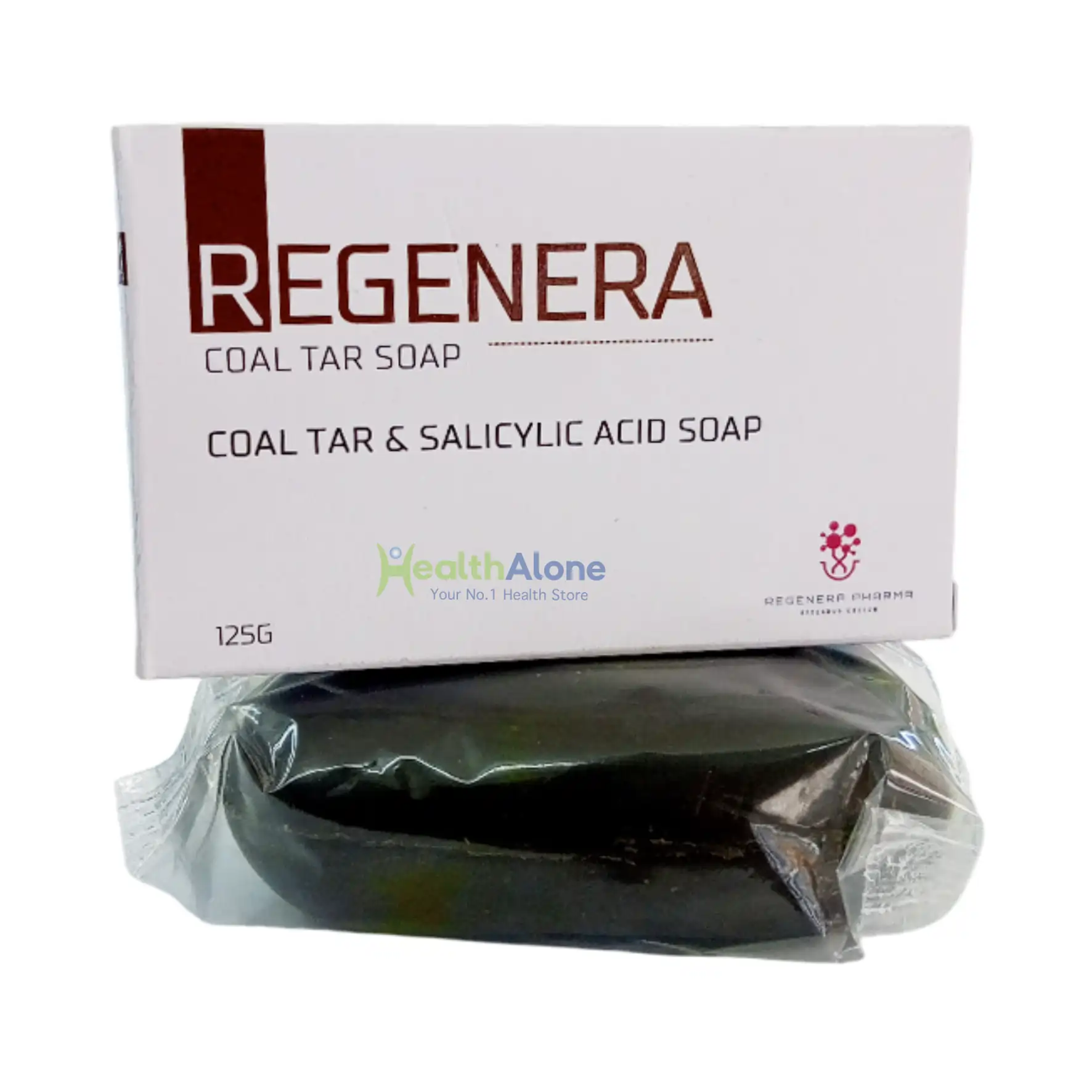
Buy Coal Tar Soap Online in Kenya – Regenera Coal Tar & Salicylic Acid Soap
Coal tar soap is the everyday way to manage psoriasis, seborrheic dermatitis, dandruff and stubborn scaling — a medicated bar you wash with rather than a treatment you have to remember to apply. This one combines coal tar 1%, which calms itching and slows the overproduction of skin cells behind the scaling, with salicylic acid 3%, which lifts the built-up scale away.
At HealthAlone, a licensed, pharmacist-led Kenyan health store, you get the original sealed bar and an honest account of how coal tar behaves — including which of the three tar products we stock actually suits what you are treating.
Which Coal Tar Product Should You Choose?
We stock three, they are not interchangeable, and this is the question we are asked most.
Coal tar soap — this one. Coal tar 1% with salicylic acid 3%: gentler on tar, stronger on scale-lifting. It is the maintenance option, used as your daily wash. Choose it for keeping things quiet between flares, for dandruff and mild scaling, and if you want the least disruption to your routine.
Coal tar solution — coal tar 4.25% with salicylic acid 2%, lathered on and left for five minutes before rinsing. Much more tar, still washed off. Choose it for the scalp, or when scaling covers a large area of the body and a bar is not doing enough.
Coal tar cream — coal tar 4.25% with salicylic acid 2%, left on the skin rather than rinsed. Choose it for specific stubborn plaques — elbows, knees, shins — where hours of contact do more than minutes.
Many people use two: the soap daily, and the solution or cream during a flare. If you are not sure, message our pharmacist and describe what you are treating and where.
What Coal Tar Soap Does
In psoriasis and related conditions, skin cells are produced faster than they can be shed, piling up as thick, itchy, flaking plaques.
Coal tar slows that overproduction and reduces itching — often the first relief people notice. At 1% it is milder than the solution or cream, which is what makes it suitable for daily use.
Salicylic acid at 3% is the higher-strength ingredient here, and it does the lifting: softening and removing built-up scale. That matters because thick scale blocks anything applied afterwards from reaching the skin. Washing with this bar effectively prepares the skin for whatever comes next.
Haz Tar, Mega Tar and Other Tar Soaps
Several coal tar soaps are sold in Kenya and people ask us how they compare. The honest answer is that they do the same job and differ mainly in two things: how much coal tar they contain, and what else is in them.
Check the pack for the tar percentage before comparing on price. More tar is not automatically better — it also means more staining, more smell and more chance of irritation. This one is coal tar 1% with salicylic acid 3%: a deliberately mild tar dose paired with a higher scale-lifting strength.
If a clinic recommended a specific brand, use that one. Otherwise pick a formulation you will actually keep using — consistency matters far more than small differences between brands.
Key Benefits of Coal Tar & Salicylic Acid Soap
- Coal tar 1% eases itching and slows the excess skin-cell production behind scaling
- Salicylic acid 3% lifts and softens built-up scale
- Used for psoriasis, seborrheic dermatitis, dandruff and chronic scaly eczema
- Mild enough for daily or near-daily washing
- Works on the body and the scalp
- A bar rather than a bottle — simple, travels well, nothing to spill
- Prepares scaly skin so anything applied afterwards can actually reach it
How to Use Coal Tar Soap
- Wet the affected area with lukewarm water — not hot.
- Lather the bar in your hands and apply to the affected areas rather than rubbing the bar directly onto irritated skin.
- Massage gently for 30 to 60 seconds. That contact time is what lets the ingredients work.
- Rinse thoroughly and pat dry.
- Start once daily and adjust to what your skin tolerates. Use it regularly during a flare, then taper as things settle rather than stopping abruptly.
- Follow with a gentle, fragrance-free moisturiser. Tar and salicylic acid can both dry the skin, and moisturising afterwards is what keeps this comfortable long-term.
Do not use it on the same days as scrubs or other exfoliating products — stacking exfoliants on already-irritated skin causes the irritation that makes dark marks on melanin-rich skin.
What to Expect
It stains — but less than the stronger products. At 1% tar this bar is far more forgiving of towels and bedding than a 4.25% cream or solution. Still use a dark facecloth and keep it on a draining dish.
It smells of tar. Milder than the cream, but present. Most people wash with it in the evening.
It increases sun sensitivity. Both coal tar and salicylic acid do this, and Kenya sits on the equator with strong ultraviolet all year. Use a broad-spectrum sunscreen on exposed areas and keep treated skin covered where you can. This matters considerably more here than in the countries where most tar advice is written.
Give it time. Itching often eases within days; scaling takes two to four weeks to change properly.
Who Is It For?
It suits psoriasis on the body or scalp, persistent seborrheic dermatitis or stubborn dandruff, skin gone thickened and scaly from long-term scratching, and anyone who wants tar treatment built into a daily wash rather than an extra step to remember.
It is not right for acute, weeping, blistered or infected skin, for open cracks, or for a rash nobody has diagnosed. Psoriasis in particular is often mistaken for ringworm on darker skin, and treating it with the wrong cream wastes months — if you are unsure, ask before you buy.
Safety note: for external use only; keep away from the eyes, mouth and genitals, and rinse with clean water if it gets in the eyes. Do not use on broken, weeping, blistered, infected or acutely inflamed skin, or on open cracks. Avoid the face unless a doctor has directed it. Patch test on a small area before first use — coal tar causes irritation or a folliculitis-type rash in a small number of people. It may cause dryness or mild irritation; a fragrance-free moisturiser afterwards helps, and you should stop if irritation persists. Both ingredients increase sensitivity to sunlight, so use broad-spectrum sunscreen on exposed skin and avoid strong sun and any UV treatment while using it. Do not combine it with scrubs, other exfoliating acids or additional tar products on the same day without advice. Not for use on children unless a doctor has directed it, and salicylic acid should not be applied over large areas of a child’s skin. Tell your pharmacist if you are pregnant or breastfeeding. Keep out of reach of children. This soap manages scaling and itching; it does not cure psoriasis, seborrheic dermatitis or eczema, which are long-term conditions needing proper medical management. See a doctor for skin that is painful, cracked open, weeping, infected, rapidly spreading, or covering a large area of the body.
Why Buy from HealthAlone Kenya?
Psoriasis is commonly misdiagnosed in Kenya, and people often reach coal tar after months of the wrong creams. HealthAlone is a pharmacist-led African health ecosystem, licensed by the Pharmacy and Poisons Board. Everything we sell is original, sealed and correctly stored, and you will see the current price right on this page, always accurate rather than a figure gone stale elsewhere. We stock all three tar formats, so when you ask us which to buy we have no reason to point you at the most expensive one — and if what you describe needs a dermatologist rather than a bar of soap, we will say so.
We deliver across Nairobi and all major Kenyan towns — Mombasa, Kisumu, Nakuru, Eldoret, Thika and beyond — and we serve customers across East Africa, including Tanzania and Uganda. You can also collect your order at our shop at Kahawa Sukari Shopping Center, Nairobi. Living abroad? Order online from the US or UK and we deliver to your family in Kenya. It is one more step in our vision: building Africa’s most trusted health ecosystem, accessible to everyone, everywhere.
Frequently Asked Questions
What is coal tar soap used for?
It is used for psoriasis, seborrheic dermatitis, dandruff and chronic scaly eczema, on the body and the scalp. The coal tar eases itching and slows the excess skin-cell production that causes scaling, while the salicylic acid lifts the built-up scale away. It manages these conditions rather than curing them, and it is mild enough to use as a regular wash.
What are the benefits of coal tar soap?
It reduces scaling and visible flaking, eases the itching that comes with psoriasis and eczema, gently exfoliates, and helps calm irritation. Because it is a soap rather than a leave-on treatment, it fits into an existing routine instead of adding a step — which is why many people manage better with it long-term than with a cream they forget to apply.
Should I choose the soap, the solution or the cream?
The soap is coal tar 1% with salicylic acid 3%, mild enough for daily washing and best for maintenance and mild scaling. The solution is coal tar 4.25%, lathered on and left five minutes before rinsing, and is the one for the scalp or for scaling over large areas. The cream is coal tar 4.25% left on the skin, best for specific stubborn plaques on elbows, knees and shins. Many people use the soap daily and one of the stronger two during a flare.
How does it compare with other tar soaps?
Tar soaps do the same job and differ mainly in how much coal tar they contain and what else is in the formula. Check the percentage on the pack before comparing on price. More tar is not automatically better — it also means more staining, more smell and more chance of irritation. This one is deliberately mild on tar at 1% and higher on salicylic acid at 3%. If a clinic recommended a specific brand, use that one.
Does it stain and does it smell?
Both, but less than the stronger tar products because the tar content is lower. Use a dark facecloth, keep the bar on a draining dish, and most people wash with it in the evening. Staining and smell are the main reasons people abandon coal tar, so it is worth knowing before you buy rather than after.
How often can I use it?
Start once daily and adjust to what your skin tolerates. Use it regularly during a flare, then reduce the frequency as things settle rather than stopping abruptly. Do not use it on the same day as scrubs or other exfoliating products, and follow it with a fragrance-free moisturiser, since both ingredients can dry the skin.
Do I need sunscreen with it?
Yes. Both coal tar and salicylic acid increase sensitivity to sunlight, and Kenya sits on the equator with strong ultraviolet all year. Use a broad-spectrum sunscreen on exposed areas and keep treated skin covered where practical. This matters more here than in the countries where most coal tar advice is written.
How much does coal tar soap cost in Kenya?
You will see the current price right on this page, always up to date — we keep it accurate rather than publishing figures that go stale elsewhere. Used once daily, a bar lasts several weeks, so compare on how long it lasts rather than on the sticker, and keep it on a draining dish, which makes a real difference. Buying from a licensed pharmacist-led store also means the bar is original and correctly stored.
Where can I buy coal tar soap in Kenya?
You can buy Regenera Coal Tar & Salicylic Acid Soap online at HealthAlone, a licensed Kenyan health store. We deliver across Nairobi, Mombasa, Kisumu, Nakuru, Eldoret, Thika and the rest of Kenya, and we serve customers in East Africa, including Tanzania and Uganda. You can also buy it in person at our shop at Kahawa Sukari Shopping Center, Nairobi.