


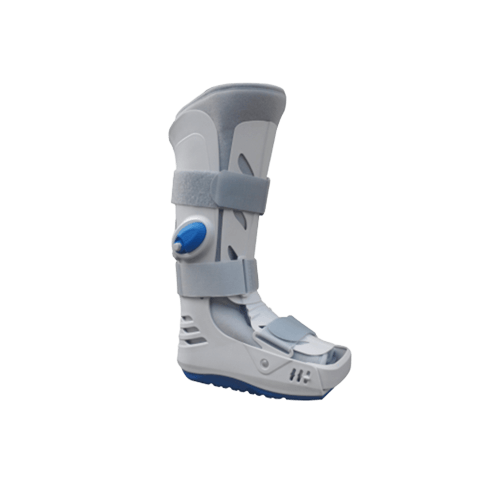
Dyna Easycast Pneumatic Walker: Protects a Healing Fracture While You Walk On It, and Comes Off to Wash
This Dyna Easycast pneumatic walker holds a healing ankle or foot fracture still while letting you walk on it, so a bone knits without six weeks on crutches inside a plaster cast that stays on until somebody cuts it off. Air cells inside the boot inflate round the leg to hold it firmly, and the whole thing unstraps for washing, for checking the skin and for the exercises our doctor allows.
It is model 1273 in the Dynamic Easycast range and it costs 13,870 shillings. The air cells are the difference between this and a plain boot: swelling goes down over the first fortnight of an injury, and a boot you can re-inflate keeps gripping as the leg changes, where a fixed boot that fitted on day two is loose by day twenty. Our doctor decides whether a fracture may be walked on, and our pharmacist asks for that before selling one.
What It Is For
A stable ankle or foot fracture our doctor has said may bear weight.
A severe ankle sprain or ligament injury needing more protection than a brace.
After foot or ankle surgery, on the surgeon’s instruction.
An Achilles tendon injury, where the boot holds the ankle at the angle the repair needs.
And a stress fracture or a slow-healing foot ulcer, where taking the load off one part of the foot is the treatment.
For an ankle that needs support rather than immobilising, the ankle immobilizer is lighter and our pharmacist will say which yours wants.
Why a Boot Rather Than a Plaster Cast
It comes off. You can wash the leg, look at the skin, and do the movements our doctor allows, none of which is possible in plaster.
You can walk on it where our doctor permits weight, which keeps the rest of the leg strong and keeps you working.
It can be re-inflated as the swelling settles, so the grip stays right through the whole period rather than only in the first week.
And it can be re-used. A plaster cast is cut off and thrown away; a boot goes back in the cupboard and comes out if the other ankle ever needs it.
Where our doctor wants the leg kept off the ground entirely, a pair of elbow crutches goes alongside the boot, and our pharmacist will size them to you.
Putting It On
Sit down, let the air out, and open every strap before the leg goes anywhere near it.
Slide the heel right to the back of the boot. A heel sitting forward is the single commonest fitting error and it makes the whole boot rock as you walk.
Wear the sock that comes with it, or a long clean sock. Skin against a boot liner for weeks is how pressure sores start.
Fasten from the foot upwards, firm with room for a finger under each strap, then inflate until the leg feels held rather than squeezed.
Stand, take twenty steps and reset it. Straps bed in and the air redistributes the moment you load the leg.
Let air out if the foot throbs, tingles or goes cold. Those mean too much pressure, every time.
The Daily Checks That Matter
Look at the skin every single day with the boot off: the heel, both ankle bones, the top of the foot, the shin and the back of the calf. A red mark that stays red after you press it means come and see us that day.
Press a toenail and watch the colour return. Pins and needles, numbness, a cold or bluish foot, or pain that climbs rather than settles mean let air out and ring us.
Watch the calf. Pain, swelling, warmth or redness in the calf, and above all sudden breathlessness or chest pain, mean a hospital today. Keeping a leg still raises the risk of a clot, and our doctor will say whether you need anything to prevent one.
Move the toes and the knee hourly while you are awake, and keep the leg raised when resting.
Ask our doctor on day one which exercises you may do, because the thigh and calf muscles waste quickly when a leg is protected and they are what you will walk on afterwards.
Coming Out of It
Our doctor sets the duration and steps you down, usually from the boot to a brace to nothing, alongside exercises.
Even up your shoes meanwhile. A boot on one foot is far taller than a shoe on the other, and that difference aches in the hip and back within days. A thick-soled shoe or an even-up wedge on the other foot fixes it, and our pharmacist can advise.
Wipe the shell and hand-wash the liner in cool water with mild soap, and let both dry fully before the boot goes back on.
Is a Pneumatic Walker Right for You?
This boot suits stable fractures cleared for weight-bearing, severe sprains, post-operative feet and Achilles injuries. Please speak to our doctor before buying one if any of these apply:
- Nobody has X-rayed the ankle or foot. Whether a fracture may be walked on is a decision for our doctor after imaging, and getting it wrong costs months. Please come to us or go to a hospital first.
- The foot is cold, pale, dusky or numb, or the pain is severe and climbing. Go to a hospital today.
- The calf is painful, swollen or warm, or you are short of breath. Go to a hospital today.
- You have diabetes, poor circulation or reduced sensation in the foot. These feet can be damaged inside a boot without feeling it, so they need daily checking by somebody else.
- The skin is broken, infected or weeping, or there is an open wound under where the boot sits.
Our pharmacists will fit the boot, set the inflation and show you the daily skin checks, and our doctor will say whether the fracture may bear weight and for how long the boot stays on.
Where to Buy a pneumatic walker in Kenya
Order online and we deliver countrywide, or collect from our pharmacy at Kahawa Sukari Shopping Center, Nairobi. We send orders to Nairobi and every neighbourhood around it — the CBD, Westlands, Parklands, Gigiri, Muthaiga, Runda, Rosslyn, Kitisuru, Lower Kabete, Lavington, Kileleshwa, Kilimani, Karen, Langata, South B, South C, Eastleigh, Buruburu, Donholm, Embakasi, Ngong Road, Kasarani, Roysambu, Zimmerman, Githurai, Ruaka, Banana Hill, Two Rivers, Village Market and Pride Lands — and across Kiambu, Thika, Juja, Ruiru, Kikuyu, Limuru and Ngong.
Beyond the capital we deliver to Mombasa, Kisumu, Nakuru, Eldoret, Nyeri, Machakos, Athi River, Kitengela, Kajiado, Naivasha, Narok, Kericho, Bomet, Kisii, Migori, Homa Bay, Siaya, Bungoma, Busia, Kakamega, Vihiga, Webuye, Kitale, Nandi Hills, Iten, Kapenguria, Embu, Meru, Chuka, Kerugoya, Murang’a, Othaya, Nyahururu, Nanyuki, Maralal, Isiolo, Marsabit, Moyale, Wajir, Mandera, Garissa, Lodwar, Kitui, Mwingi, Makueni, Emali, Kibwezi, Voi, Taveta, Wundanyi, Mariakani, Diani, Ukunda, Kilifi, Watamu, Malindi, Lamu and Hola. Tell us the town and we will confirm the delivery cost and the timing before you pay.
Across Africa, ask us before you order. We have sent orders to Uganda, Tanzania, Somaliland and as far as Malawi, and we will quote for Rwanda, Burundi, South Sudan, Ethiopia, Zambia, Zimbabwe, Botswana, Mozambique, Nigeria, Ghana, South Africa and the rest of the continent. Tell us the destination and we will confirm any import paperwork before the parcel leaves us.
Living abroad? Order from wherever you are and we deliver here in Kenya. Kenyans in the UK, the United States, Canada, South Africa and the Gulf order from us regularly for a parent or relative at home, and this is one of the things they order most. Tell us the address and we will deliver and set it up.
Why Buy Your a pneumatic walker from HealthAlone Kenya?
HealthAlone is a pharmacist-led health ecosystem licensed by the Pharmacy and Poisons Board, and our stock is original, sealed and correctly stored. Kahawa Sukari is a real counter with real pharmacists behind it.
Our doctor decides whether a fracture may bear weight before anybody buys a walker boot, and our pharmacist fits it, sets the inflation and shows you the daily skin checks.
It is one more step in our vision: building Africa’s most trusted health ecosystem, accessible to everyone, everywhere.
FAQs
Why a boot instead of a plaster cast?
Because it comes off. You can wash the leg, look at the skin and do the movements our doctor allows, none of which is possible in plaster. You can walk on it where our doctor permits weight, it can be re-inflated as the swelling settles, and it can be used again if the other ankle ever needs it.
What do the air cells actually do?
They let the grip be adjusted as the leg changes. Swelling goes down over the first fortnight of an injury, and a boot you can re-inflate keeps holding, where a fixed boot that fitted on day two is loose by day twenty.
Can I walk on it?
Only if our doctor has said the fracture may bear weight. That decision comes after imaging and it is not one to make from a product page. Please come and see us or go to a hospital first.
How do I put it on?
Sit down, let the air out and open every strap first. Slide the heel right to the back of the boot, which is the commonest fitting error and makes the whole boot rock if you get it wrong. Wear a long clean sock, fasten from the foot upwards, then inflate until the leg feels held rather than squeezed.
How much should I inflate it?
Until the leg feels held, not squeezed. Then stand, take twenty steps and reset it, since the air redistributes the moment you load the leg. Let air out if the foot throbs, tingles or goes cold.
What should I check every day?
With the boot off, look at the heel, both ankle bones, the top of the foot, the shin and the back of the calf. A red mark that stays red after you press it means come and see us that day.
Is there a risk of a blood clot?
Keeping a leg still raises the risk. Move the toes and the knee hourly while you are awake, keep the leg raised when resting, and ask our doctor whether you need anything to prevent one. Calf pain, swelling, warmth or redness, and above all sudden breathlessness or chest pain, mean a hospital today.
Can I sleep in it?
Our doctor will tell you. If you do, let some air out at night so it is firm rather than tight, and check the skin first thing.
One leg is now taller than the other. What can I do?
A boot is far taller than a shoe, and that difference aches in the hip and back within days. A thick-soled shoe or an even-up wedge on the other foot fixes it, and our pharmacist can advise on what we hold.
Can I do any exercise in it?
Ask our doctor on day one. The thigh and calf muscles waste quickly when a leg is protected, and they are what you will walk on afterwards, so there is usually something you may safely do.
What size do I need?
Tell our pharmacist your shoe size and the measurement around the widest part of your calf. These are sized by shoe size, and the calf measurement decides whether the upright part fits.
How long do I wear it?
Our doctor sets the duration and steps you down, usually from the boot to a brace to nothing, alongside exercises. The end date is part of the treatment.
How do I clean it?
Wipe the shell and hand-wash the liner in cool water with mild soap. Let both dry fully before the boot goes back on, since a damp liner against skin for a day is how sores start.
Where can I buy a pneumatic walker in Kenya?
Order from HealthAlone online and we deliver countrywide, or collect from our pharmacy at Kahawa Sukari Shopping Center, Nairobi. We deliver across Nairobi — the CBD, Westlands, Parklands, Lavington, Kileleshwa, Kilimani, Karen, Langata, South B, South C, Eastleigh, Buruburu, Donholm, Embakasi, Kasarani, Roysambu, Zimmerman, Githurai and Ruaka — and across Kiambu, Thika, Juja, Ruiru, Kikuyu, Limuru and Ngong, as well as Mombasa, Kisumu, Nakuru, Eldoret, Nyeri, Machakos, Kitengela, Naivasha, Narok, Kericho, Kisii, Bungoma, Kakamega, Kitale, Embu, Meru, Chuka, Murang’a, Nyahururu, Nanyuki, Isiolo, Garissa, Lodwar, Kitui, Voi, Kilifi, Malindi and Diani. Ring us to check stock and give us your shoe size.