

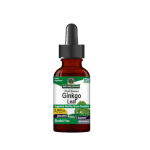

Echinacea Root Liquid Extract 30ml
Echinacea root from Nature’s Answer supplies an alcohol-free liquid extract of Echinacea purpurea root, taken at one millilitre three times a day at the first sign of a cold, where each millilitre is equivalent to one gram of dried root.
Two things decide whether this is right for you, and neither is on most echinacea listings. There are several conditions in which echinacea should not be taken at all, two of which are common in Kenya. And it is a ten-day product rather than a daily one, which is not a limitation of this brand but of the herb. Both are set out first, because they matter more than the benefits do.
Who Should Not Take Echinacea Root
Echinacea is contraindicated in tuberculosis and in HIV infection. It is also contraindicated in autoimmune conditions including rheumatoid arthritis, lupus and multiple sclerosis, and in anyone taking medicine that deliberately suppresses the immune system, such as after a transplant.
The reason is the same in every case. Echinacea is taken to prod the immune system, and these are all situations where the immune system is either already in trouble, already being deliberately held down, or already attacking the body it belongs to. Prodding it is the wrong direction of travel.
This is the most important paragraph on the page, and in this country it is not a theoretical caution. If you are living with HIV, being treated for TB, or on any medicine after a transplant, do not take this. Come and talk to us and we will help you find something that is actually appropriate.
Allergy is the other one. Echinacea belongs to the daisy family alongside ragweed, chrysanthemum and marigold, and severe allergic reactions including anaphylaxis have been reported in people sensitive to that family. If you react to any of those plants, do not start this without asking us.
Ten Days, Then Stop
Echinacea is not recommended for longer than ten days for an acute infection in an otherwise healthy adult, and long-term continuous use is not recommended at all.
A 30ml bottle at one millilitre three times a day is exactly ten days. That is convenient rather than coincidental, and it is how the product should be used: one bottle, one course, then stop.
The reason for the limit is that constantly stimulating an immune system is not obviously a good idea, and there is a case report of low white cell counts associated with long-term use. An immune booster that lowers white cells when taken indefinitely is a fair summary of why the ten days exists.
What the Evidence Shows for Colds
The honest version is more modest than the category, and it is worth having before you spend on a bottle.
For preventing colds, the pooled evidence shows a trend in echinacea’s favour that does not reach statistical significance, amounting to something in the region of a ten to twenty per cent reduction in relative risk. That is small enough that most people would not notice it.
For treating a cold you already have, only one of seven good-quality trials found a reduction in how long the illness lasted.
The largest single reason for that patchy picture is that echinacea products are not one thing, which is the next section. Taken together: a reasonable thing to try at the first sign of a cold, with modest expectations and a ten-day limit. Not a reason to skip a flu vaccine or to delay seeing someone about a cough that will not settle.
Which Echinacea You Are Buying
Three species are used medicinally, and the root and the flowering tops are different preparations again. Echinacea purpurea, angustifolia and pallida are separate plants, and a trial of one tells you very little about the others.
This is why the research cannot be pooled cleanly and why two bottles labelled echinacea may behave quite differently. It also means the only sensible way to buy it is to know exactly which species and which part of the plant is in the bottle.
This one states it: Echinacea purpurea root, at a one-to-one extract ratio, alcohol-free. Most listings in this market state none of those three things, and being able to check them is the strongest practical argument for this particular bottle.
How to Take It
Shake the bottle. Take one millilitre, roughly 28 drops, three times a day in a little water or juice. Start at the first sign of a cold rather than waiting to see how it develops, since that is where what evidence exists is concentrated.
Continue for up to ten days, which is one bottle, and then stop. If the illness is not settling by then, or you are getting worse rather than better, that is a reason to be seen rather than to buy a second bottle.
Side Effects
The common ones are stomach upset and rash. Allergic reactions are the ones that matter, and they can be severe in people sensitive to the daisy family.
Stop immediately and get help for swelling of the face, lips or tongue, difficulty breathing, or a spreading rash with faintness. Stop and speak to us about a milder rash or itching.
Other Things to Tell Us About
Speak to our pharmacist before starting if any of these apply:
- Any regular prescription medicine — echinacea affects two of the main liver enzymes that clear medicines, so bring your list rather than guess.
- Clozapine, nimodipine or chemotherapy — specific interactions are documented with these.
- Pregnancy — one small study of first-trimester use found no increase in malformations, which is reassuring but thin. Ask us.
- Breastfeeding — use caution, and ask us first.
- Children — ask us about the dose rather than halving the adult one.
What Is in the Bottle
Echinacea purpurea root extract at a one-to-one ratio, so one millilitre is equivalent to one gram of dried root, in a 30ml dropper bottle from Nature’s Answer. Alcohol-free, vegan, gluten-free and non-GMO.
Storing It
Keep it tightly capped, cool, dry and out of direct sunlight, away from the bathroom and the cooker. Do not use it if the safety seal is broken or missing. Keep out of reach of children.
Where to Buy Echinacea Root in Kenya
Order online and we deliver countrywide, or collect from our pharmacy at Kahawa Sukari Shopping Center, Nairobi. We send orders to Nairobi and every neighbourhood around it — the CBD, Westlands, Parklands, Gigiri, Muthaiga, Runda, Rosslyn, Kitisuru, Lower Kabete, Lavington, Kileleshwa, Kilimani, Karen, Langata, South B, South C, Eastleigh, Buruburu, Donholm, Embakasi, Ngong Road, Kasarani, Roysambu, Zimmerman, Githurai, Ruaka, Banana Hill, Two Rivers, Village Market and Pride Lands — and across Kiambu, Thika, Juja, Ruiru, Kikuyu, Limuru and Ngong.
Beyond the capital we deliver to Mombasa, Kisumu, Nakuru, Eldoret, Nyeri, Machakos, Athi River, Kitengela, Kajiado, Naivasha, Narok, Kericho, Bomet, Kisii, Migori, Homa Bay, Siaya, Bungoma, Busia, Kakamega, Vihiga, Webuye, Kitale, Nandi Hills, Iten, Kapenguria, Embu, Meru, Chuka, Kerugoya, Murang’a, Othaya, Nyahururu, Nanyuki, Maralal, Isiolo, Marsabit, Moyale, Wajir, Mandera, Garissa, Lodwar, Kitui, Mwingi, Makueni, Emali, Kibwezi, Voi, Taveta, Wundanyi, Mariakani, Diani, Ukunda, Kilifi, Watamu, Malindi, Lamu and Hola. Packed to travel, cool-boxed where the weather calls for it, and tracked from our counter to your door.
Across Africa, ask us before you order. We have sent orders to Uganda, Tanzania, Somaliland and as far as Malawi, and we will quote for Rwanda, Burundi, South Sudan, Ethiopia, Zambia, Zimbabwe, Botswana, Mozambique, Nigeria, Ghana, South Africa and the rest of the continent. What we need to know first is your country’s import rules for food supplements and how long the parcel will be in transit; we will tell you plainly if a destination is not worth the shipping cost.
Living abroad? Order from wherever you are and we deliver to your family here in Kenya. Kenyans in the UK, the United States, Canada, South Africa and the Gulf order from us regularly for parents and relatives at home. You pay online from where you live, we deliver to their door anywhere on the list above, and we confirm with you once it has arrived. Give us their name, their phone number and the estate or town they live in, and we will do the rest.
Why Buy Your Echinacea Root from HealthAlone Kenya?
HealthAlone is a pharmacist-led health ecosystem licensed by the Pharmacy and Poisons Board, and our stock is original, sealed and correctly stored.
Echinacea is sold across this country as an immune booster with nothing said about the people whose immune systems should not be boosted. If you are living with HIV, being treated for TB, or on medicine after a transplant, we will tell you plainly not to take it. If you are otherwise well and want something to take at the first sign of a cold, we will tell you what the evidence actually shows and how long to take it for.
It is one more step in our vision: building Africa’s most trusted health ecosystem, accessible to everyone, everywhere.
Frequently Asked Questions
Can I take echinacea if I am HIV positive?
No. Echinacea is contraindicated in HIV infection. It is taken to stimulate the immune system, which is not the right thing to do when the immune system is already compromised or being managed with treatment. Speak to us or to your clinic and we will help you find something appropriate.
Can I take it if I am being treated for TB?
No. Tuberculosis is a contraindication for echinacea, for the same reason. Finish your TB treatment under your clinic’s supervision and do not add an immune stimulant to it.
What if I have an autoimmune condition?
Do not take it without your doctor. Rheumatoid arthritis, lupus and multiple sclerosis are all contraindications, and so is any medicine taken to suppress the immune system, including after a transplant.
Does echinacea root actually prevent colds?
Only weakly. The pooled evidence shows a trend in its favour that does not reach statistical significance, in the region of a ten to twenty per cent reduction in relative risk. Most people would not notice that. For treating a cold already under way, one of seven good trials found a shorter illness.
How long should I take it for?
No longer than ten days for an acute infection, and not continuously. A 30ml bottle at the stated dose is exactly ten days, which is one course. Long-term use is not recommended and has been associated with low white cell counts in a case report.
When should I start taking it?
At the first sign of a cold rather than once it is established. That is where what evidence exists is concentrated.
Does it contain alcohol?
No. This is the alcohol-free Nature’s Answer extract.
Why does the species matter?
Because three different species are used medicinally and the root and the flowering tops are different preparations again. A trial of one tells you little about another, which is why echinacea research is so mixed. This bottle is Echinacea purpurea root at a one-to-one ratio, which most listings do not tell you.
I am allergic to ragweed. Can I take it?
Ask us first. Echinacea is in the same botanical family as ragweed, chrysanthemum and marigold, and severe allergic reactions including anaphylaxis have been reported in people sensitive to that family.
Can I take it with my other medicines?
Bring your list. Echinacea affects two of the main liver enzymes that clear medicines, and specific interactions are documented with clozapine, nimodipine and some chemotherapy agents.
Is it safe in pregnancy?
One small study of first-trimester use found no increase in malformations, which is reassuring but limited. Use caution while breastfeeding. Speak to us before starting either way.
Where can I buy echinacea root in Kenya?
From HealthAlone, online for delivery countrywide or over the counter at Kahawa Sukari Shopping Center, Nairobi. We deliver across Nairobi — the CBD, Westlands, Parklands, Gigiri, Muthaiga, Runda, Kitisuru, Lavington, Kilimani, Karen, Langata, South B, South C, Eastleigh, Kasarani, Roysambu, Githurai, Ruaka and Banana Hill — and to Kiambu, Thika, Juja, Ruiru, Kikuyu, Limuru, Ngong, Mombasa, Kisumu, Nakuru, Eldoret, Nyeri, Machakos, Kitengela, Naivasha, Narok, Kericho, Kisii, Migori, Homa Bay, Bungoma, Busia, Kakamega, Kitale, Embu, Meru, Nanyuki, Nyahururu, Isiolo, Marsabit, Wajir, Mandera, Garissa, Lodwar, Kitui, Makueni, Voi, Taveta, Mariakani, Diani, Ukunda, Kilifi, Watamu, Malindi and Lamu. Outside Kenya we have delivered to Uganda, Tanzania, Somaliland and Malawi, and we quote for Rwanda, Burundi, South Sudan, Ethiopia, Zambia, Nigeria, Ghana, South Africa and the rest of Africa on request.


